
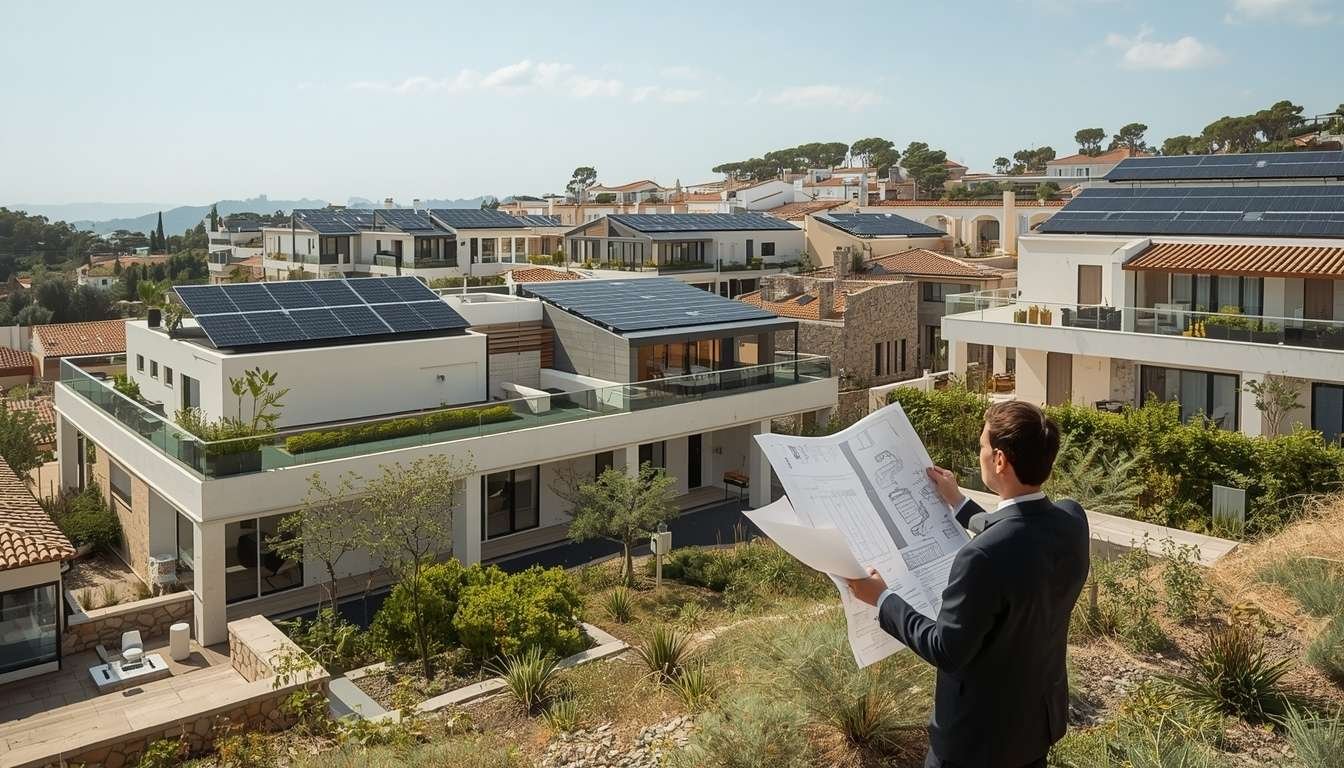
The greenlab portugal sustainability consultancy expansion strategy reflects an important shift in how specialized environmental advisory firms can grow beyond their original markets. Greenlab is developing its position from a Portuguese sustainability consultancy focused on the built environment into a broader advisory business serving corporate sustainability, decarbonization, sustainable materials and urban development.
The opportunity extends beyond providing environmental assessments or helping property developers obtain green building certifications. Businesses increasingly need support with sustainability planning, carbon measurement, environmental performance and investment decisions.
For Greenlab, the next stage of growth involves combining established technical expertise with international market development, digital capabilities and new business models.
Its expansion direction is particularly relevant to US investors, real estate developers, construction companies and sustainability professionals evaluating how specialized European consultancies can develop international operations.
Understanding this strategy requires examining Greenlab’s existing capabilities, its international ambitions, the markets it can serve and the operational decisions that will influence its growth.
Key Takeaways
- Greenlab is expanding beyond building sustainability into corporate ESG, carbon neutrality and sustainable project management.
- International expansion requires selecting specific services and markets rather than exporting an entire consultancy portfolio.
- Building certifications, lifecycle assessments and decarbonization services create opportunities across real estate and construction.
- Technology, artificial intelligence and data-driven assessments can strengthen consulting capabilities and operational efficiency.
- Strategic partnerships, specialized expertise and measurable sustainability outcomes are essential for sustainable international growth.
How Greenlab Portugal Is Expanding Beyond Building Sustainability
Greenlab established its position through sustainability consulting for buildings, construction projects and the built environment. Its expertise includes environmental certifications, building performance and sustainable design.
However, its business direction has expanded into several connected areas.
The company’s current service portfolio includes:
- Building sustainability: Consulting for LEED, BREEAM, WELL, SBTool and LiderA certification systems.
- Corporate sustainability: ESG indicators, sustainability reporting, stakeholder engagement and environmental risk assessments.
- Sustainable materials: Life Cycle Assessments (LCA) and Environmental Product Declarations (EPD).
- Carbon neutrality: Carbon footprint assessments and decarbonization planning.
- Urban sustainability: Sustainable energy plans, environmental assessments and smart city strategies.
- Sustainable project management: Integrating environmental objectives into investment and development projects.
This diversification creates opportunities to work with different customers throughout the lifecycle of a project.
For example, a real estate developer may initially need building certification support. The same client could later require operational energy assessments, carbon reporting and sustainability improvements across its property portfolio.
Expanding into related services allows a consultancy to develop longer client relationships instead of relying exclusively on individual certification projects.
The Three Strategic Priorities Behind Greenlab’s Expansion
Greenlab’s international development is connected to three strategic priorities identified in its 2025 expansion direction.
Internationalization Through Specialized Services
Expanding into another country does not necessarily mean offering every existing service immediately.
Greenlab has identified the need to restructure its international approach around specific services rather than taking its entire portfolio into foreign markets.
This is an important strategic distinction.
Different markets have different certification requirements, regulatory environments, customer expectations and competitive conditions.
A consultancy may have strong technical expertise in several areas but still need to identify which service has the clearest commercial opportunity in a particular country.
A focused international strategy should establish:
- Which service has the strongest demand.
- Which industries are most likely to purchase it.
- Whether local certification knowledge is required.
- Which professional partnerships are necessary.
- How projects will be delivered and supported.
- Whether local operations or cross-border consulting are more practical.
This approach can reduce unnecessary expansion costs and make market entry easier to evaluate.
Developing a Living Lab Business Model
Greenlab has also identified the development of a Living Lab as part of its business model strategy.
A Living Lab can connect research, practical testing, innovation and real-world applications.
For a sustainability consultancy, this creates opportunities to demonstrate how environmental strategies perform under actual operating conditions.
Potential applications include:
- Testing building energy performance solutions.
- Evaluating sustainable construction materials.
- Demonstrating resource-efficient technologies.
- Testing smart building systems.
- Supporting collaboration between researchers and industry.
- Developing practical sustainability solutions for clients.
A well-developed Living Lab can also support business development by giving potential customers a clearer understanding of the consultancy’s capabilities.
However, its commercial value depends on how effectively research and demonstrations translate into services, partnerships or measurable improvements.
Expanding Technology and Artificial Intelligence Capabilities
Technology is another important part of Greenlab’s growth direction.
The company has highlighted the development of its technological capabilities and artificial intelligence applications.
One notable area is the integration of building Life Cycle Assessment into BREEAM-related software and applications.
This connects environmental assessment with the digital processes used to evaluate buildings.
For sustainability consultants, technology can improve how project information is collected, assessed and presented.
It can also create opportunities to develop more consistent workflows across complex projects.
The strategic objective should be to use technology to strengthen technical decision-making rather than simply add digital tools to an existing consulting service.
Greenlab’s International Market Position and Project Experience
International expansion becomes more credible when a consultancy can demonstrate experience across different project types and markets.
Greenlab has developed a portfolio that includes building certification, sustainable materials, energy efficiency and urban development projects.
Its publicly presented project experience includes:
- Palmares Ocean Living and Golf in Portugal.
- Atenor Office Building with WELL and BREEAM certifications.
- Alcântara Office Building with LEED and WELL certifications.
- University of Lisbon Student Residence with bioclimatic architecture consulting.
- National Research Oncology Centre with bioclimatic architecture consulting.
- Sustainable materials assessments for companies including Amorim, Revigrés and Saint-Gobain Weber.
- An energy efficiency plan for the Dominican Republic.
These projects demonstrate how its technical services can apply across real estate, institutional buildings, construction materials and urban infrastructure. Greenlab+1
What Its International Experience Demonstrates
In an October 2025 interview, Greenlab’s founder described a portfolio exceeding 200 projects and an international presence across eight countries.
This experience provides a foundation for further expansion because the company has worked beyond a single domestic market.
However, international project experience and established local operations are not the same thing.
A consultancy can deliver projects in several countries without maintaining permanent offices or large teams in each market.
For future expansion, Greenlab needs to determine where recurring demand justifies a deeper commercial presence and where project-based international delivery remains more efficient. Jornal de Negócios
Which International Markets Offer Opportunities for Greenlab?
Greenlab’s expansion strategy should prioritize markets where its specialist capabilities match identifiable customer requirements.
For a Portuguese consultancy, international growth can involve European markets as well as selected opportunities in North America, Latin America and other regions.
The most relevant opportunities are likely to emerge where property investment, construction activity and sustainability requirements create demand for specialist technical advice.
European Real Estate and Construction Markets
Europe provides a natural starting point for a consultancy with experience in internationally recognized building assessment systems.
Potential customers include:
- Commercial property developers.
- Real estate investment companies.
- Architecture and engineering firms.
- Construction contractors.
- Hospitality and resort developers.
- Industrial property owners.
Greenlab’s experience with BREEAM, LEED and WELL can support projects where developers want to assess environmental performance, occupant well-being and building quality.
However, each market requires local knowledge. Building regulations, professional requirements, procurement practices and client expectations can differ considerably between countries.
North American Sustainability Consulting Opportunities
The United States presents a different opportunity because of its large and geographically diverse real estate and construction markets.
For Greenlab, the most practical entry point would be a narrowly defined service rather than attempting to compete across the entire sustainability consulting industry.
Potential service areas include:
- Building Life Cycle Assessment.
- LEED-related sustainability consulting.
- Building performance simulations.
- Sustainable materials assessment.
- Embodied carbon analysis.
- Corporate sustainability advisory.
US customers may already work with established engineering firms, environmental consultants and architecture practices.
Greenlab would therefore need to demonstrate a clear technical advantage, complementary expertise or a service that fills a specific capability gap.
A partnership with an established US architecture or engineering firm could provide a more practical starting point than immediately establishing a full local operation.
Latin American and Other Emerging Markets
Greenlab’s international project portfolio also demonstrates experience outside Europe.
Its Dominican Republic energy efficiency project illustrates how sustainability consulting can extend into regional energy planning.
Other potential markets may offer opportunities in:
- Sustainable hospitality development.
- Commercial building certification.
- Urban infrastructure planning.
- Energy efficiency assessments.
- Construction material sustainability.
- Climate resilience planning.
Market selection should be based on actual customer demand, available partners, project economics and the company’s ability to deliver services consistently.
A large potential market is not automatically a profitable market.
How Greenlab Can Turn International Interest Into Repeatable Business
International consulting growth requires more than winning occasional overseas contracts.
The business needs a repeatable process for identifying prospects, building relationships, pricing services and delivering projects.
Select One Market and One Core Service First
Greenlab’s decision to internationalize through selected services creates an opportunity to develop a more focused market-entry model.
A practical approach would involve:
- Identifying markets with relevant project demand.
- Selecting one service with a strong technical advantage.
- Defining the ideal customer profile.
- Mapping local competitors and potential partners.
- Testing demand through targeted business development.
- Reviewing project profitability before expanding the offer.
For example, if building Life Cycle Assessment is selected as the initial international service, the company could target real estate developers and engineering firms that need lifecycle information during design and investment decisions.
This creates a more specific commercial proposition than marketing a broad sustainability consultancy to every industry.
Develop Strategic Partnerships
Partnerships can help international consulting businesses access customers and local expertise without immediately building a large overseas workforce.
Potential partners include:
- Architecture and engineering practices.
- Real estate advisory firms.
- Construction management companies.
- Environmental consultancies.
- Certification specialists.
- Universities and research organizations.
The strongest partnerships should create a clear benefit for both businesses.
A local engineering firm may provide market access and project delivery capacity, while Greenlab contributes specialist sustainability expertise and technical assessment capabilities.
Partnership agreements should clarify client ownership, responsibilities, quality control, confidentiality, fees and intellectual property.
Build a Repeatable International Sales Process
A consultancy should avoid depending entirely on personal introductions or occasional networking opportunities.
A structured sales process can include:
- Targeted industry research.
- Qualified prospect lists.
- Technical capability presentations.
- Project-specific proposals.
- Demonstration projects.
- Partner referrals.
- Follow-up and relationship management.
Greenlab’s participation in the ELITE and World Trade Center Lisbon international development ecosystem is relevant to this objective.
The 2025 interview highlighted the importance of strategic thinking, financial development and preparing the company’s second-line leadership for expansion.
This matters because international growth increases management demands as well as sales opportunities. Jornal de Negócios
The Role of ESG, Building Certifications and Decarbonization in Future Growth
Greenlab’s expansion is connected to the increasing importance of environmental performance across investment, construction and corporate operations.
These services are related, but they address different customer requirements.
Building Certifications Create an Established Service Foundation
LEED, BREEAM, WELL and other certification systems provide structured ways to assess building performance.
For developers and property owners, these assessments can support decisions about:
- Energy efficiency.
- Water consumption.
- Indoor environmental quality.
- Sustainable materials.
- Building management.
- Occupant health and well-being.
Greenlab’s existing certification experience provides a foundation for offering broader technical services to the real estate sector.
The commercial opportunity is not limited to obtaining a certificate. Clients may also need support during design, construction, commissioning and building operation.
Life Cycle Assessment Creates Opportunities Beyond Certification
Life Cycle Assessment evaluates environmental impacts associated with a product, material or building across relevant stages of its lifecycle.
For construction companies and material manufacturers, LCA can help identify environmental impacts associated with:
- Raw material extraction.
- Manufacturing.
- Transportation.
- Construction.
- Building use.
- Maintenance.
- End-of-life treatment.
Environmental Product Declarations provide standardized environmental information about products based on relevant assessment rules.
These services can help manufacturers respond to customer requirements and support more informed material selection.
For Greenlab, combining LCA and EPD expertise with digital building assessment processes creates an opportunity to develop a more integrated service offering.
Corporate Sustainability Expands the Customer Base
Corporate sustainability consulting addresses organizational performance rather than focusing only on individual buildings or materials.
Relevant services include:
- ESG performance indicators.
- Sustainability reporting.
- Carbon footprint measurement.
- Environmental risk assessment.
- Stakeholder engagement.
- Sustainability action plans.
This creates opportunities to work with companies outside the traditional construction sector.
However, Greenlab must distinguish between reporting support, technical measurement and strategic implementation. Each requires different capabilities and customer expectations.
How Artificial Intelligence and Data Can Strengthen Greenlab’s Consulting Model
Artificial intelligence can influence how sustainability consultancies collect information, analyze environmental performance and deliver technical services.
Greenlab’s technology strategy creates opportunities to connect its consulting expertise with more efficient digital processes.
Automate Repetitive Assessment Work
Consultants often work with large quantities of technical information, including building specifications, material data, energy consumption records and environmental assessments.
Technology can help organize this information and reduce repetitive administrative tasks.
Potential applications include:
- Extracting information from technical documents.
- Organizing building material inventories.
- Supporting environmental data collection.
- Identifying missing assessment information.
- Comparing alternative design scenarios.
- Preparing structured project reports.
These applications can improve efficiency when supported by reliable data and appropriate technical review.
Integrate AI With Building Life Cycle Assessment
One of Greenlab’s identified technology developments involves integrating building lifecycle assessments into BREEAM software and applications.
This is strategically relevant because it connects environmental evaluation with the digital tools used during building assessment.
A more integrated process could help consultants and project teams evaluate environmental considerations earlier in the design process.
For example, a development team comparing different construction materials could use structured lifecycle information to assess alternative specifications before finalizing the design.
The quality of the outcome still depends on accurate input data, appropriate assessment boundaries and professional verification.
Protect Data Quality and Technical Accountability
AI should support expert judgment rather than replace it.
Sustainability assessments can influence construction decisions, investment planning and environmental claims.
Incorrect data or poorly controlled automated calculations can create significant risks.
A responsible technology strategy should include:
- Verified data sources.
- Documented assessment methods.
- Human review of important outputs.
- Data security controls.
- Version management.
- Clear responsibility for technical conclusions.
This is particularly important when delivering services across different regulatory environments.
Building a Living Lab Into a Commercial Growth Platform
Greenlab’s Living Lab concept is another important part of its expansion direction.
The company has described plans for a facility connected to a build-to-rent concept, including coliving and coworking uses.
The proposed rural setting also creates opportunities for practical sustainability experiments and land transformation activities.
The project is intended to serve two purposes: support experimentation and demonstrate Greenlab’s capabilities to potential customers. Jornal de Negócios
Turn Research Into Demonstrable Business Value
A Living Lab becomes commercially useful when it connects experimentation with customer problems.
For example, it could demonstrate:
- Building energy performance improvements.
- Sustainable construction materials.
- Resource-efficient building operations.
- Indoor environmental quality.
- Water management.
- Landscape and land-use strategies.
These demonstrations can help customers understand technical recommendations before applying them to larger developments.
Use the Facility for International Collaboration
A physical demonstration environment can also support international relationships.
Potential activities include:
- Hosting technical workshops.
- Demonstrating sustainability solutions.
- Supporting professional training.
- Collaborating with universities.
- Welcoming international project teams.
- Testing new products and technologies.
For international clients, a Living Lab can provide a practical way to evaluate the consultancy’s expertise.
Its commercial success should ultimately be measured through research outcomes, customer engagement, new partnerships and projects generated rather than the facility’s visibility alone.
Key Facts About Greenlab Portugal’s Expansion Strategy
| Area | Available information |
|---|---|
| Headquarters | Lisbon, Portugal |
| Core expertise | Building sustainability and environmental consulting |
| International experience | Projects and presence across eight countries reported in 2025 |
| Project portfolio | More than 200 projects reported in 2025 |
| Main strategic pillars | Internationalization, business model development and technology |
| Living Lab | Planned demonstration and experimentation environment |
| Technology direction | AI and digital integration in sustainability assessments |
| Building certifications | LEED, BREEAM, WELL, SBTool and LiderA |
| Additional services | ESG, LCA, EPD, carbon neutrality and sustainable urban planning |
The international footprint and project portfolio figures reflect company information reported in 2025. They should not be interpreted as independently verified counts of permanent offices or current active projects. Jornal de Negócios+2
Main Challenges Greenlab Must Address During International Expansion
International growth can strengthen a consultancy’s market position, but it also introduces operational and commercial risks.
Greenlab’s ability to expand will depend on how effectively it manages these challenges.
Different Regulatory and Certification Requirements
International markets have different building codes, environmental requirements and professional standards.
Even when a certification system operates internationally, local regulations and project practices can differ.
Greenlab should assess each target market separately and work with local specialists when necessary.
Competition From Established Consulting Firms
The sustainability consulting market includes global engineering firms, environmental specialists and large professional services organizations.
These companies may have established client relationships, larger teams and extensive local resources.
Greenlab can compete more effectively by emphasizing specialist expertise, technical depth and carefully selected services rather than attempting to match the full service portfolios of larger competitors.
Recruiting and Retaining Specialized Talent
International projects require professionals who understand technical assessment methods and local market requirements.
Expansion can create pressure on existing teams if project delivery increases faster than recruitment and training.
The company needs a clear approach to:
- Technical recruitment.
- Leadership development.
- Knowledge sharing.
- Professional training.
- Local project partnerships.
- Quality assurance.
Preparing second-line management is particularly important because founders cannot personally manage every international relationship and project as the business grows.
Managing Financial and Operational Resources
International projects may require travel, local partnerships, technical resources and additional management capacity.
A company can win more contracts while experiencing weaker profitability if project costs are not properly controlled.
Each market should have a clear financial assessment covering:
- Market development expenses.
- Project delivery costs.
- Local professional fees.
- Currency exposure.
- Payment terms.
- Staffing requirements.
- Expected project margins.
Growth should be measured by profitable delivery and repeat business rather than the number of countries entered.
Which Expansion Model Should Greenlab Prioritize?
Greenlab has several possible routes for international growth. The important decision is choosing a model that matches its technical capabilities, available resources and customer demand.
Three expansion models deserve consideration.
1. Direct Market Entry
This approach involves establishing a local office or permanent commercial presence in a target country.
Advantages:
- Greater control over customer relationships.
- Direct access to local opportunities.
- Stronger market visibility.
- Better coordination of ongoing projects.
Limitations:
- Higher operating expenses.
- Recruitment and management requirements.
- Additional legal and administrative responsibilities.
- Greater financial exposure before demand is established.
This model makes more sense when a market already provides sufficient recurring business to support a local operation.
2. Strategic Partnerships
Working with established local consultancies, engineering companies or real estate professionals can provide access to international customers.
Advantages:
- Lower initial investment.
- Access to local expertise.
- Faster relationship development.
- Opportunities to share project responsibilities.
Limitations:
- Dependence on partner performance.
- Shared commercial opportunities.
- Potential differences in technical standards.
- Less direct control over customer relationships.
This model is suitable when Greenlab has specialist technical capabilities but needs local market access.
3. Project-Based International Consulting
Under this approach, Greenlab delivers selected services to international customers without immediately establishing permanent operations.
Advantages:
- Lower fixed operating costs.
- Ability to test different markets.
- Flexible project selection.
- Opportunity to develop international references.
Limitations:
- Less predictable project revenue.
- Dependence on individual contracts.
- Potential travel and coordination expenses.
- Limited local visibility.
This approach can help validate demand before making larger investments.
Comparing the Three Expansion Models
| Decision factor | Direct entry | Partnerships | Project-based |
|---|---|---|---|
| Initial investment | High | Medium | Lower |
| Local market control | High | Shared | Limited |
| Market testing | More expensive | Flexible | Highly flexible |
| Local expertise | Requires recruitment | Partner-provided | Project-dependent |
| Operational complexity | High | Medium | Lower |
| Best application | Established demand | New market development | Initial market validation |
Recommended Expansion Priorities
A phased approach appears more practical than entering several countries simultaneously.
First priority: Strengthen the existing international portfolio.
Identify countries where Greenlab already has project experience and determine whether those relationships can generate repeat business.
Second priority: Select one specialized export service.
Building LCA integration, sustainability certification consulting or another established technical service could provide a focused international proposition.
Third priority: Develop local partnerships.
Work with engineering firms, developers and professional networks that can provide market access and complementary expertise.
Fourth priority: Expand permanent operations when justified.
Consider local recruitment or an office only when recurring demand, project profitability and delivery requirements support the investment.
For US-based investors and consulting professionals examining the greenlab portugal sustainability consultancy expansion strategy, the important lesson is that international growth should follow demonstrated demand and technical differentiation rather than geographic ambition alone.
Frequently Asked Questions
1. What is Greenlab Portugal’s sustainability consultancy expansion strategy?
Greenlab’s expansion strategy focuses on internationalization, business model development and technological innovation. The company is expanding beyond building sustainability into corporate ESG, carbon neutrality, sustainable materials and digital assessment capabilities.
2. Which countries does Greenlab Portugal operate in?
Greenlab reported an international presence across eight countries in 2025. Its project portfolio includes work in Portugal and international locations such as Kazakhstan and the Dominican Republic. The exact current list of operating markets should be confirmed with the company.
3. What services does Greenlab provide?
Greenlab provides sustainability consulting for buildings, corporate organizations, construction materials and urban environments. Its services include LEED, BREEAM and WELL consulting, Life Cycle Assessment, Environmental Product Declarations, ESG advisory and carbon footprint assessment.
4. How is Greenlab using artificial intelligence?
Greenlab has identified AI and technology integration as strategic growth priorities. One highlighted development involves integrating building Life Cycle Assessment into BREEAM-related software and applications to connect environmental assessments with digital building evaluation processes.
5. What is Greenlab’s Living Lab project?
The Living Lab is a planned environment for sustainability experimentation and practical demonstrations. It is also intended to showcase the company’s capabilities to potential clients and support international collaboration.
6. Why is international expansion important for Greenlab?
International expansion allows Greenlab to access additional real estate, construction and corporate sustainability markets. It also creates opportunities to export specialist technical knowledge and develop relationships with international investors and project developers.
7. Can Greenlab’s business model work in the United States?
Its specialist services could be relevant to US real estate developers, construction companies and sustainability-focused organizations. However, successful entry would require local market research, regulatory knowledge, appropriate professional partnerships and a clearly differentiated service offering.
8. What makes Greenlab different from larger sustainability consultancies?
Its potential differentiation comes from combining building certification expertise, materials assessment, corporate sustainability and technology-driven environmental evaluation. Its ability to integrate these capabilities into practical client solutions will be important for future competitiveness.
Greenlab’s Next Growth Stage Depends on Turning Expertise Into Scalable Services
Greenlab Portugal has developed a foundation in building sustainability and expanded into several related consulting disciplines. Its next stage involves making that expertise commercially scalable across international markets.
The combination of specialized services, international partnerships, a Living Lab and technology integration creates several possible growth opportunities.
However, the strongest expansion strategy will depend on selecting markets carefully, proving demand for individual services and building the management capacity required to deliver international projects consistently.
For sustainability consultancies considering similar growth opportunities, Greenlab’s direction demonstrates why specialization, innovation and disciplined market entry should develop together rather than operate as separate business priorities.