
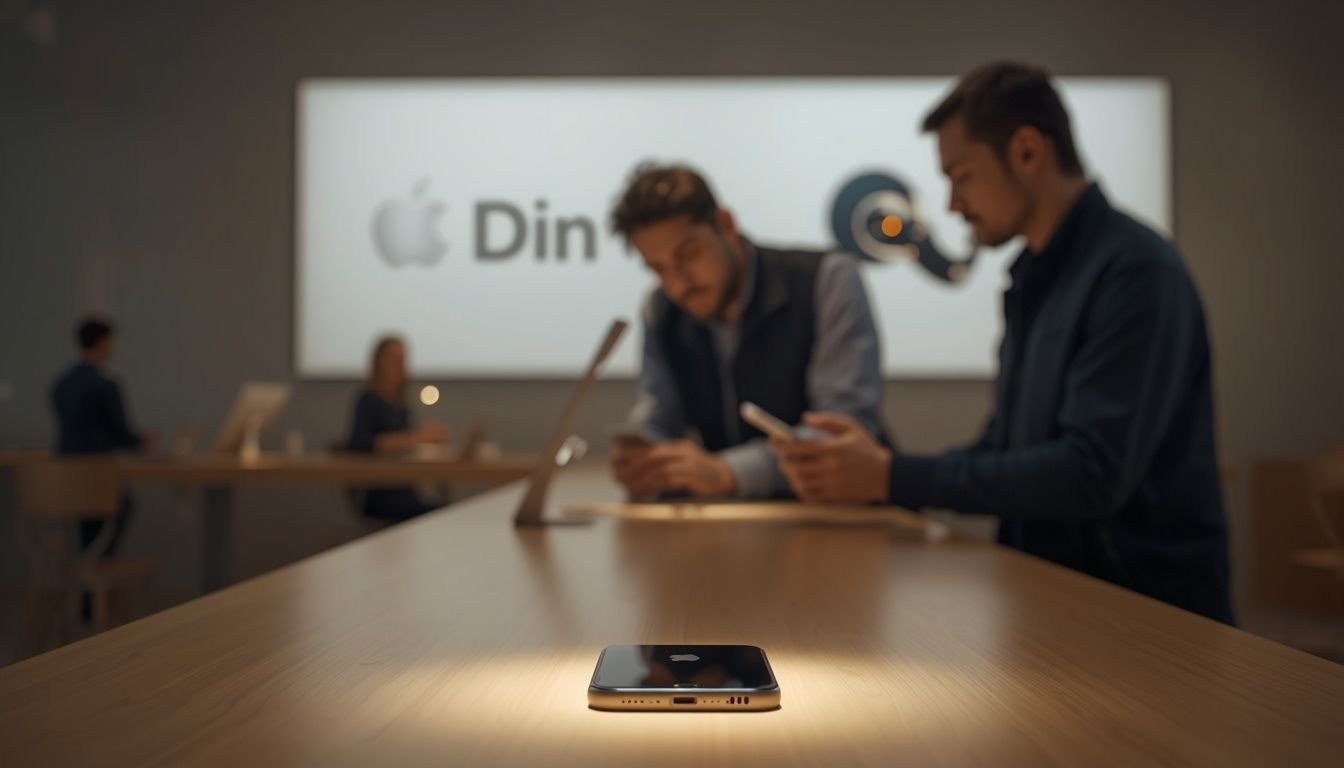
AppleCare and Genius Bar impact on customer loyalty metrics by influencing how customers feel about Apple after purchasing and using its products. A customer may initially choose an iPhone because of its features or reputation. However, the experience of getting help when something goes wrong can influence whether that customer purchases another Apple device.
AppleCare provides additional protection and support options while the Genius Bar offers in-person technical assistance through Apple Stores. Together, these services create important customer touchpoints beyond the original purchase.
Their impact should not be measured through satisfaction scores alone. Businesses need to examine whether customers return to the brand, recommend its products, renew protection plans and continue purchasing within the Apple ecosystem.
Key Takeaways
- AppleCare strengthens customer confidence by reducing the financial uncertainty of unexpected repairs.
- Genius Bar interactions can turn frustrating technical problems into positive brand experiences.
- Customer satisfaction alone does not prove long-term loyalty. Repeat purchases and retention provide stronger evidence.
- Repair costs, waiting times, service quality and first-time resolution influence customer perceptions.
- Businesses should measure satisfaction alongside retention, repeat purchases, recommendations and customer lifetime value.
How AppleCare Influences Customer Retention
AppleCare plays an important role in the relationship between Apple and its customers because it provides support after the initial purchase.
Buying an expensive device creates expectations. Customers want reliable performance and a clear solution when something breaks. Unexpected repair costs can damage their perception of a brand, particularly when they have already invested a significant amount in the product.
AppleCare+ helps reduce some of this uncertainty through additional hardware service and technical support.
Financial Protection Builds Customer Confidence
Unexpected repair expenses can influence future purchasing decisions.
For example, an iPhone owner without additional coverage may face a substantial repair bill after accidentally damaging the screen. An eligible AppleCare+ customer can receive covered service by paying the applicable service fee.
This changes the customer’s financial experience.
The current US AppleCare+ fee structure includes:
- $29 for eligible iPhone screen or back glass damage.
- $99 for other accidental damage.
- $149 for eligible theft and loss claims under AppleCare+ with Theft and Loss.
- No additional fee for eligible iPhone battery service when capacity falls below 80 percent of its original capacity.
Coverage and fees depend on the device and plan. Apple+1
The loyalty benefit comes from reducing uncertainty rather than simply making repairs cheaper.
Customers who know where to get help and what costs to expect may feel more confident keeping their devices for longer.
Convenient Support Encourages Long-Term Relationships
AppleCare also provides different support options that can reduce the inconvenience of device problems.
Depending on eligibility and location, customers may have access to:
- In-person service at an Apple Store.
- Repairs through an Apple Authorized Service Provider.
- Mail-in repair options.
- Express Replacement Service for eligible devices.
Express Replacement is particularly relevant because customers can receive a replacement device before returning their original device. A temporary credit card authorization may apply until the original device is returned and the coverage is confirmed. Apple Support+1
For someone who relies on an iPhone for work or business communication, avoiding an extended period without a working device can make a significant difference.
This convenience can influence customer effort scores and future purchasing intentions.
Why the Genius Bar Can Turn Service Problems Into Loyalty Opportunities
The Genius Bar gives customers access to in-person technical assistance at Apple Stores.
Unlike a support interaction that takes place entirely through email or automated troubleshooting, an in-store appointment allows customers to explain their problem directly and discuss possible solutions with a technician.
Apple recommends making a reservation before visiting. Technicians can inspect devices and perform diagnostic tests at no charge. If a repair is necessary, the customer receives an estimated turnaround time and applicable costs based on the problem and coverage status. Apple
This experience can influence customer loyalty in several ways.
Personal Assistance Reduces Customer Frustration
Technical problems are often stressful because customers may not know what caused the issue or whether their device can be repaired.
A helpful technician can reduce this frustration by:
- Explaining the technical problem in simple language.
- Identifying available repair options.
- Clarifying coverage and potential charges.
- Helping customers understand how to prevent similar problems.
- Providing realistic expectations about repair timelines.
The quality of the interaction matters as much as the technical solution.
A customer whose problem is resolved with clear communication may leave with greater confidence in Apple.
Repair Quality Influences Brand Trust
Customers do not judge a repair only by whether their device starts working again.
They also consider whether the problem was correctly identified, whether the repair was completed properly and whether the device performs as expected afterward.
A repair that solves the original problem without creating additional issues supports brand trust.
However, a device that returns with the same problem can damage confidence even if the technician was friendly.
This makes first-time resolution an important operational metric.
In-Person Experiences Create Stronger Brand Connections
Physical interactions can make a service experience feel more personal.
Customers can ask follow-up questions, see their device being examined and discuss available options directly.
A historical NPD Group study provides an example of this relationship. Its 2012 Tech Services Study reported that approximately 90 percent of Apple customers who used the Genius Bar were extremely or very satisfied. The study also reported that nearly 60 percent of Apple product owners were more likely to make another Apple purchase after their technical support experience.
These figures are historical findings from 2012. They should not be presented as current Apple loyalty statistics or evidence of present-day performance. 9to5Mac+1
The important takeaway is that technical support can influence how customers perceive a brand long after the original sale.
The Customer Loyalty Metrics That Measure AppleCare and Genius Bar Performance
Customer loyalty requires more than positive feedback immediately after a service appointment.
A customer may report being satisfied but still choose another brand when purchasing a new device. Another customer may experience a difficult repair but remain loyal because of their investment in Apple’s ecosystem.
For this reason, businesses should combine experience metrics with actual customer behavior.
1. Customer Satisfaction Score (CSAT)
CSAT measures how satisfied customers are with a particular interaction.
For AppleCare and Genius Bar services, customers can be asked to rate their experience after a support call, repair or store appointment.
A common measurement approach is:
\[ CSAT = \frac{\text{Satisfied Responses}}{\text{Total Responses}}\times100 \]
For example, if 180 out of 200 customers give a positive rating, the satisfaction score is 90 percent.
CSAT helps identify whether customers are happy with:
- Technician communication.
- Repair quality.
- Appointment experience.
- Service cost transparency.
- Problem resolution.
However, a high CSAT score does not automatically mean customers will purchase another Apple product.
2. Net Promoter Score (NPS)
NPS measures how likely customers are to recommend a company to others.
Customers respond to a question using a scale from 0 to 10.
Responses are divided into three groups:
| Customer group | Score | Meaning |
|---|---|---|
| Promoters | 9–10 | Likely to recommend |
| Passives | 7–8 | Generally satisfied but less enthusiastic |
| Detractors | 0–6 | Less likely to recommend |
The calculation is:
\[ NPS = \% \text{Promoters} – \% \text{Detractors} \]
For example, if 60 percent are promoters and 15 percent are detractors, the NPS is +45.
This metric helps evaluate whether AppleCare and Genius Bar interactions create positive brand advocacy.
However, NPS measures stated recommendation likelihood rather than actual referrals.
3. Customer Retention Rate
Retention measures how many existing customers continue their relationship with a business over a specific period.
For Apple, retention can be examined through repeat device purchases or continued customer relationships.
A basic retention calculation is:
\[ Retention = \frac{E-N}{S}\times100 \]
Where:
- E = Customers at the end of the period.
- N = New customers acquired during the period.
- S = Customers at the beginning of the period.
For example, a business starts with 1,000 customers, ends with 950 and acquires 200 new customers.
Its retention rate is:
\[ \frac{950-200}{1000}\times100=75\% \]
For meaningful analysis, AppleCare customers and comparable customers without coverage should be evaluated separately.
4. Repeat Purchase Rate
Repeat purchase rate measures how many customers make another purchase after their initial transaction.
For Apple, this could include customers purchasing another iPhone, upgrading to a Mac or adding an iPad or Apple Watch.
A simplified calculation is:
\[ Repeat\ Purchase\ Rate = \frac{\text{Customers Making Repeat Purchases}} {\text{Total Eligible Customers}}\times100 \]
This metric is particularly useful because it connects the service experience to actual purchasing behavior.
A customer who receives a successful repair and later purchases another Apple product demonstrates a stronger behavioral loyalty signal than someone who only reports satisfaction.
5. Customer Effort Score (CES)
CES measures how much effort customers need to make to resolve a problem.
For example, customers may be asked:
How easy was it to get your device issue resolved?
A simple 1-to-7 scale can measure perceived effort.
Lower effort generally indicates a smoother service experience when the scale runs from difficult to easy.
For Genius Bar appointments, important effort factors include:
- Booking an appointment.
- Finding an available service location.
- Explaining the problem.
- Understanding repair options.
- Completing the repair process.
- Following up after service.
A customer who resolves a problem without repeatedly contacting support may develop greater confidence in the brand.
6. Customer Lifetime Value (CLV)
Customer lifetime value estimates the financial value of a customer relationship over time.
Apple’s ecosystem makes this metric particularly relevant because customers may purchase several products and services across multiple years.
A simplified model is:
\[ CLV = \text{Average Purchase Value} \times \text{Purchase Frequency} \times \text{Customer Lifespan} \]
A more detailed financial model should also account for gross margin, acquisition costs, support costs and discount rates.
AppleCare may contribute to customer lifetime value through protection-plan revenue and stronger customer retention.
However, an increase in CLV cannot automatically be attributed to AppleCare. Device quality, product innovation, ecosystem integration and pricing also influence purchasing behavior.
Key Customer Loyalty Metrics
| Metric | What it measures | Why it matters |
|---|---|---|
| CSAT | Satisfaction with service | Identifies service problems |
| NPS | Recommendation likelihood | Measures brand advocacy |
| Retention rate | Continued customer relationships | Tracks long-term loyalty |
| Repeat purchase rate | Additional purchases | Measures actual buying behavior |
| CES | Ease of resolving problems | Identifies customer friction |
| CLV | Long-term customer value | Evaluates financial impact |
| First-time resolution | Problems solved without repeat visits | Measures service effectiveness |
| Repair turnaround time | Time required to complete service | Measures convenience |
These metrics should be reviewed together because each measures a different part of the customer relationship.
How AppleCare and Genius Bar Experiences Influence Different Loyalty Metrics
The two services contribute to customer loyalty through different mechanisms.
AppleCare primarily provides financial protection and additional support options. The Genius Bar focuses on personal technical assistance and problem resolution.
Their combined influence becomes clearer when each experience is connected to a measurable outcome.
| Customer experience | Likely customer response | Relevant metric |
|---|---|---|
| Predictable repair charges | Greater financial confidence | CSAT |
| Convenient replacement options | Less disruption | CES |
| Helpful technician interaction | Greater brand confidence | NPS |
| Successful first repair | Less frustration | First-time resolution |
| Consistent support over time | Stronger relationship | Retention |
| Positive repair followed by another purchase | Continued buying behavior | Repeat purchase rate |
| Multiple purchases across Apple products | Greater long-term value | CLV |
These are practical measurement relationships rather than proof that every positive service interaction causes a specific loyalty outcome.
The Combined Effect on the Apple Ecosystem
Apple customers may own several connected devices.
For example, someone using an iPhone, MacBook, Apple Watch and iPad may depend on multiple products for work and personal activities.
When a problem occurs, a positive support experience can reinforce confidence in the wider ecosystem.
This is important because customers do not always evaluate each product independently. They may consider the convenience of using connected devices, familiar software and access to a consistent support system.
A successful Genius Bar visit can therefore influence perceptions beyond the device being repaired.
However, ecosystem loyalty also creates a measurement challenge. A customer may continue buying Apple products because switching costs are high rather than because they are genuinely satisfied with customer service.
Businesses should distinguish between voluntary loyalty and continued purchasing driven by convenience or switching barriers.
What Can Reduce the Loyalty Benefits of AppleCare and Genius Bar?
Not every support interaction creates a positive customer relationship.
Even when customers have additional coverage, several service problems can reduce satisfaction and future purchasing intentions.
Unexpected Repair Charges
Customers may assume that AppleCare covers every type of damage.
However, coverage depends on the plan, device and circumstances. Service fees and exclusions can still apply.
When customers discover unexpected charges during a repair appointment, their perception of the service may become negative.
Clear explanations of coverage before a repair can help prevent this problem.
Long Appointment and Repair Waiting Times
Convenient support loses its value when customers cannot access it quickly.
Limited appointment availability, unavailable replacement parts and extended repair times can increase frustration.
For customers who depend on their devices for work, even a short delay can create practical problems.
Repeated Repair Problems
A repair that does not resolve the original issue can damage customer confidence.
Repeated visits increase customer effort and may reduce trust in the technician or service process.
Tracking repeat repair rates can help identify recurring technical or operational problems.
Inconsistent Customer Service
Customers expect a consistent experience across Apple Stores and support channels.
If one technician provides clear information while another gives conflicting explanations, customers may lose confidence.
Consistent communication and accurate repair information are important parts of customer retention.
How to Evaluate the Actual Loyalty Impact of AppleCare and Genius Bar
Businesses analyzing Apple’s customer experience should avoid assuming that higher satisfaction automatically produces higher retention.
A more reliable approach is to connect individual service experiences with customer behavior over time.
Compare Customers With and Without AppleCare
Create separate customer groups:
- Customers with active AppleCare coverage.
- Customers without additional coverage.
- Customers who recently used the Genius Bar.
- Customers who received remote or mail-in support.
Compare their satisfaction, repeat purchases, service costs and retention.
This helps identify whether customers with additional coverage demonstrate different loyalty patterns.
However, AppleCare customers may already be more committed to Apple before purchasing coverage. This creates selection bias.
A simple comparison cannot establish that AppleCare caused higher retention.
Track Customer Behavior After a Repair
A useful measurement period should extend beyond the immediate repair experience.
For example, track customer behavior at:
- 30 days after service for initial satisfaction and unresolved problems.
- 90 days for repeat support contacts and repair issues.
- 6 months for continued engagement and product purchases.
- 12 months for repeat purchases and retention.
These are suggested internal measurement intervals, not published Apple reporting periods.
The purpose is to identify whether positive service experiences translate into lasting relationships.
Connect Service Data With Purchase Data
A customer satisfaction survey cannot tell a business whether someone actually purchased another device.
For stronger analysis, connect:
- Customer support records.
- AppleCare enrollment and renewal information.
- Repair history.
- Customer satisfaction responses.
- Repeat purchase records.
This creates a more complete picture of the relationship between service quality and customer loyalty.
Any analysis using customer-level information should follow applicable privacy requirements and use properly authorized data.
Expert Decision-Making: Which Metrics Best Reveal AppleCare and Genius Bar Loyalty?
The most useful metrics depend on the business question being investigated.
Using every available metric without a clear purpose can create unnecessary reporting and make it difficult to identify meaningful patterns.
A better approach is to prioritize metrics according to the outcome being measured.
If the Goal Is to Measure Immediate Service Quality
Prioritize:
- CSAT
- Customer Effort Score
- First-time resolution
- Repair turnaround time
These indicators help identify whether customers received effective and convenient support.
A high satisfaction score combined with low repeat repair rates is a stronger operational signal than satisfaction alone.
If the Goal Is to Measure Long-Term Customer Loyalty
Prioritize:
- Customer retention rate.
- Repeat purchase rate.
- NPS.
- Customer lifetime value.
These metrics provide a broader view of customer relationships.
Repeat purchase and retention data are especially important because they reflect customer behavior rather than stated intentions.
If the Goal Is to Evaluate AppleCare’s Business Value
Prioritize:
- AppleCare enrollment rate.
- Plan renewal rate.
- Claims frequency.
- Average service cost.
- Customer retention.
- Customer lifetime value.
These measures help evaluate both the financial performance of protection plans and their relationship with customer retention.
Recommended Measurement Framework
| Business objective | Primary metric | Supporting metric |
|---|---|---|
| Improve repair experience | CSAT | CES |
| Reduce unresolved problems | First-time resolution | Repeat repair rate |
| Improve customer advocacy | NPS | Customer reviews |
| Strengthen retention | Retention rate | Repeat purchase rate |
| Evaluate protection plans | Renewal rate | Claims frequency |
| Measure financial value | CLV | Revenue per customer |
The most important recommendation: Do not use NPS or CSAT as standalone evidence of customer loyalty. Combine customer feedback with actual purchase and retention behavior.
For a complete evaluation of AppleCare and Genius Bar impact on customer loyalty metrics, compare customer groups over the same measurement period and account for differences in device ownership, customer history and service needs.
This approach provides a more realistic understanding of whether customer support contributes to long-term brand relationships.
Frequently Asked Questions
1. How does AppleCare improve customer loyalty?
AppleCare can improve customer loyalty by providing additional repair coverage, technical support and convenient service options. These benefits can reduce financial uncertainty and make customers more confident about continuing their relationship with Apple.
2. Does the Genius Bar increase customer retention?
A positive Genius Bar experience can support customer retention by resolving technical problems and improving brand confidence. However, actual retention depends on other factors such as product quality, pricing, customer needs and competing products.
3. What customer loyalty metrics are most important for Apple?
The most relevant metrics include customer retention rate, repeat purchase rate, NPS, CSAT, Customer Effort Score and customer lifetime value. Each measures a different aspect of the customer relationship.
4. How does AppleCare affect customer satisfaction?
AppleCare can improve satisfaction by reducing the financial uncertainty associated with eligible repairs and providing additional support options. However, service fees, exclusions and repair delays can still influence customer perceptions.
5. What is the relationship between Genius Bar service and repeat purchases?
A successful repair experience can strengthen customer confidence and increase the likelihood of future purchases. However, businesses should measure actual repeat purchasing rather than relying only on customers’ stated intentions.
6. Can NPS accurately measure Apple customer loyalty?
NPS provides useful information about customers’ willingness to recommend Apple. However, it does not directly measure repeat purchases or retention. It should be combined with behavioral metrics for a more complete evaluation.
7. How can businesses measure AppleCare’s return on investment?
Businesses can evaluate AppleCare’s financial contribution by examining plan revenue, claims costs, service expenses, renewal rates and customer lifetime value. Comparing customer retention between similar groups can also help identify its potential relationship with long-term revenue.
8. Why is first-time repair resolution important for customer loyalty?
First-time resolution reduces the need for repeated appointments and additional troubleshooting. It can improve customer satisfaction, reduce service effort and strengthen confidence in the repair process.
9. Does a positive Genius Bar experience guarantee another Apple purchase?
No. A positive experience can improve purchasing intentions, but it does not guarantee another purchase. Product pricing, innovation, customer budgets and competing brands also influence buying decisions.
10. How should companies evaluate AppleCare and Genius Bar impact on customer loyalty metrics?
Companies should examine customer satisfaction, recommendation likelihood, repair quality, retention and repeat purchases together. Comparing customers with different support experiences over consistent time periods provides a stronger basis for evaluating the relationship between service quality and loyalty.
Measuring Service Quality Beyond the Repair Appointment
AppleCare and Genius Bar demonstrate why customer relationships should not be evaluated only at the point of purchase.
A product problem creates an opportunity for a company to either strengthen customer confidence or damage it. Financial protection, convenient repair options, helpful technicians and successful problem resolution can all contribute to a positive experience.
For businesses evaluating this relationship, the priority should be connecting service performance with actual customer behavior.
CSAT and NPS help explain how customers feel. Repair resolution and customer effort reveal how well support performs. Retention, repeat purchases and customer lifetime value show whether the relationship continues.
The strongest evidence of customer loyalty is not simply that customers leave a repair appointment satisfied. It is that they continue choosing the brand because they trust the products and the support behind them.