
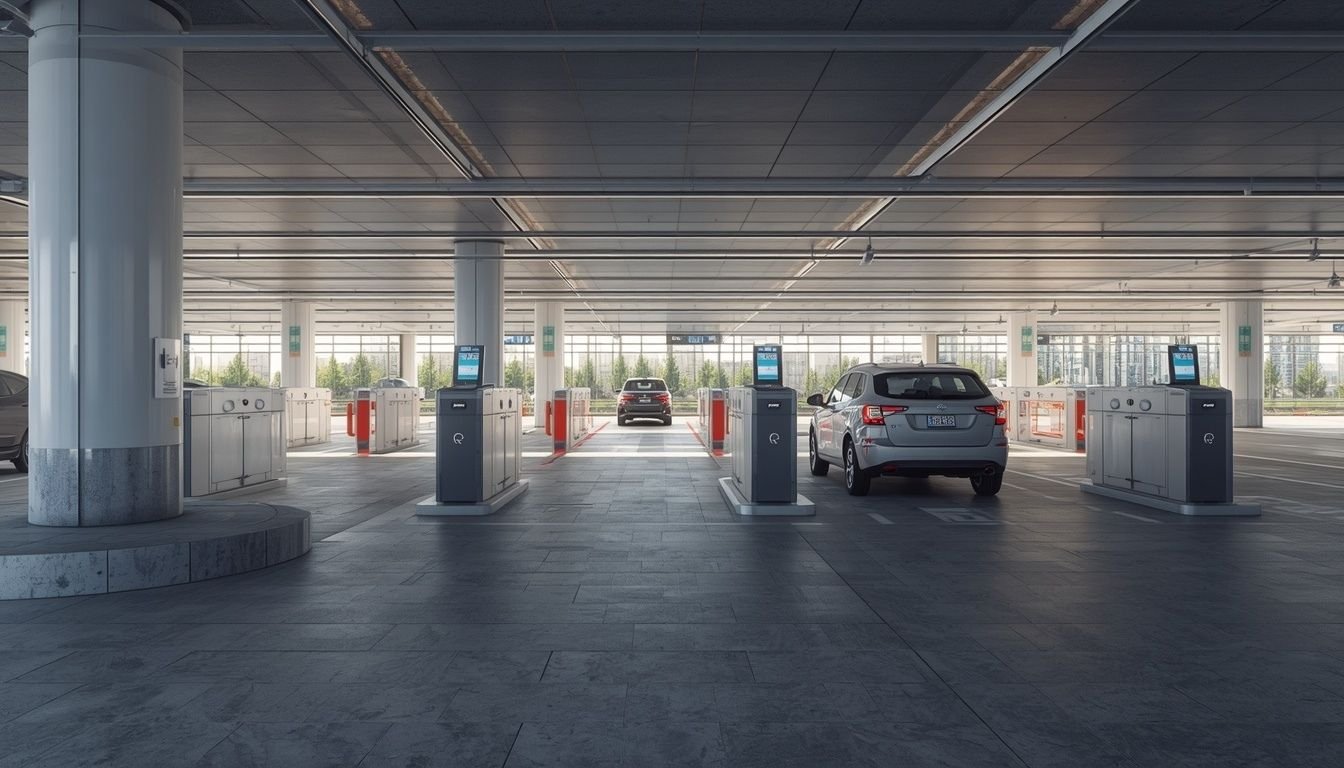
SKIDATA use cases case studies customers are most useful to organizations evaluating parking management, automated entry, digital ticketing and visitor access systems. The company serves environments where large numbers of people or vehicles need to enter, pay and move through a facility efficiently.
Its applications extend beyond ski resorts. Airports, office buildings, shopping centers, stadiums and other destinations can use its technology to manage access and connect different parts of the visitor journey.
The important question is not simply which companies use SKIDATA. It is what each installation helps solve, how the technology fits existing operations and whether the same approach would work for another business.
What Is SKIDATA and What Problems Does It Solve?
SKIDATA is an access management technology provider focused on parking and mobility, mountain destinations, and sports and entertainment. Its solutions can combine physical access equipment with software, payment options, ticketing and integrations with other systems.
For a facility operator, these capabilities can address several operational problems.
- Vehicle entry and exit: Manage parking access through gates, ticketing, license plate recognition and digital payment options.
- Visitor admission: Validate tickets and credentials at stadiums, attractions and other venues.
- Online reservations: Connect advance bookings with on-site access and available capacity.
- Operational oversight: Monitor activity across facilities and use available data to inform staffing and operational decisions.
- Connected services: Integrate access management with compatible payment platforms, reservation systems and other business applications.
The best configuration depends on the site. A small parking facility does not necessarily need the same infrastructure as a major airport or stadium.
Real SKIDATA Customer Case Studies in the United States
Several documented installations illustrate how access management can support different operating environments. The most useful examples are those that identify the customer’s needs, the solution implemented and the operational outcomes reported.
1. JBG Smith in Washington, DC
Use case: Commercial real estate and multi-site parking management
JBG Smith manages commercial real estate in the Crystal City area of Northern Virginia. Its parking operation required a modern system capable of managing multiple facilities while supporting tenants and visitors.
The documented project included:
- Approximately 12,000 parking spaces across 64 lanes.
- Centralized monitoring and control of parking facilities.
- License plate recognition and digital parking validation.
- Reporting and management tools for parking operations.
- A phased replacement of the existing access system.
The implementation was completed in two phases to limit disruption. The reported financial outcomes were approximately $1 million in annual savings and an additional $4 million in annual revenue.
These are project-specific figures rather than a general performance guarantee for other parking operators.
Why this case matters: Large property managers often need to coordinate parking across multiple buildings and tenant groups. Centralized controls and digital validation can reduce fragmented workflows and make it easier to manage parking access at scale.
2. Westfield Century City in Los Angeles
Use case: Shopping mall parking and customer convenience
Westfield Century City is a major shopping destination in Los Angeles, California. Its parking operation needed to support a large volume of visitors without making every customer stop to collect a physical ticket.
The documented installation included space for approximately 5,000 vehicles and a ticketless parking experience connected to the mall’s app.
Key capabilities included:
- License plate recognition at entry and exit.
- Ticketless parking access.
- Credit card billing linked to the customer’s account.
- Digital receipts.
- Integration with the shopping center’s app.
The project demonstrates how parking can become part of the broader retail customer experience rather than a separate administrative task.
Why this case matters: Shopping centers can benefit when customers spend less time handling parking tickets and payments. However, the actual value depends on visitor adoption, payment reliability and how well the parking experience integrates with the mall’s existing digital services.
3. BJC Barnes-Jewish Hospital in St. Louis
Use case: Healthcare parking and employee access
Hospitals have different parking requirements from shopping centers. Patients and visitors need straightforward access, while employees and authorized personnel may require controlled entry across multiple facilities.
BJC Barnes-Jewish Hospital needed its parking system to work with an existing third-party building access solution. The project covered six parking facilities and more than 10,000 credentialed users.
The implementation involved:
- A Parking.Logic management system.
- Integration with the existing building access infrastructure.
- Coordination of parking and building credentials.
- Preventive maintenance and technical support.
- Staff training and operational reporting.
The central challenge was not simply installing parking gates. It was maintaining reliable coordination between parking access and the hospital’s wider credential system.
Why this case matters: Healthcare facilities should evaluate integration quality, uptime requirements and support coverage as carefully as equipment features. A system that works well in isolation may still create operational problems if it cannot reliably communicate with existing access controls.
What These Three Case Studies Reveal
| Customer | Main challenge | Relevant capability | Key lesson |
|---|---|---|---|
| JBG Smith | Managing parking across a large commercial district | Centralized controls and validation | Multi-site operations need consistent oversight |
| Westfield Century City | Making shopping mall parking more convenient | Ticketless access and app integration | Customer experience depends on the entire entry and payment journey |
| BJC Barnes-Jewish Hospital | Coordinating parking with building credentials | Third-party integration and technical support | Reliability and access coordination are essential in complex facilities |
These examples represent different business needs. They should not be treated as interchangeable proof that one configuration will work equally well for every property.
SKIDATA Use Cases Across Different Industries
Beyond the three US examples, SKIDATA has documented deployments and customer references across several other industries. Each environment has its own access, capacity and operational requirements.
Airports and transportation hubs
Airports must accommodate passengers, employees, rental vehicles and other parking users with different access needs.
Relevant applications include:
- Advance parking reservations.
- License plate recognition.
- Digital payments.
- Parking guidance.
- Integration with reservation and revenue management systems.
For example, Budapest Airport has been associated with an integrated reservation approach designed to balance parking availability and demand. This illustrates the value of connecting advance booking with actual parking capacity.
For US airport operators, the key evaluation points are reservation accuracy, peak-period traffic, integration with existing systems and the handling of exceptions when a vehicle or booking cannot be recognized.
Stadiums and sports venues
Sports venues face sharp changes in demand before and after events. Entry delays can affect spectators, staff and event operations.
SKIDATA’s applications in this sector include digital ticket validation, access control, accreditation and parking management.
These systems can help operators coordinate entry points and verify access credentials. The best configuration depends on the venue’s layout, event schedule, ticketing provider and expected attendance.
A stadium should assess entry throughput under peak conditions rather than relying only on average daily usage.
Ski resorts and mountain destinations
Ski resorts need to manage lift access, ticket sales and visitor movement during seasonal peaks.
Relevant applications include:
- Online ski ticket sales.
- Electronic ticket validation.
- Contactless access gates.
- Digital ticketing.
- Integration with sales and resort management systems.
The operational challenge is to keep ticket validation dependable when large numbers of visitors arrive within a short period. Resorts should also consider seasonal staffing, weather-related disruptions and the effect of equipment downtime on lift operations.
Office buildings and commercial properties
Office buildings often need different access rules for employees, tenants, contractors and visitors.
Parking access systems can support assigned parking rights, digital validations, license plate recognition and centralized reporting.
The most useful configuration depends on how many facilities are involved and whether parking access must work alongside building security systems.
Shopping centers and retail destinations
Retail parking may involve short visits, longer stays, tenant validations, reserved spaces and special parking arrangements.
Integrated systems can help operators manage these different user groups without creating separate manual processes for every transaction.
The business case should consider parking revenue, tenant requirements, customer convenience and the cost of operating and maintaining the system.
How to Evaluate SKIDATA for Your Business
Customer examples can help establish whether a technology provider has handled similar requirements. However, a successful installation at another organization does not automatically prove that the same system will deliver equivalent results at your facility.
Before committing to an access management project, evaluate the following factors.
1. Match the solution to your operating model
Start by identifying the main problem you need to solve.
- Choose parking access and payment capabilities when queues, manual transactions or parking validation are major concerns.
- Prioritize ticketing and visitor access when admission control and event entry are the main challenges.
- Focus on centralized monitoring when multiple facilities need consistent management.
- Prioritize integrations when existing building security, payment or reservation systems must remain in use.
Avoid purchasing a large integrated system when a smaller configuration would meet your requirements.
2. Calculate the total cost of ownership
The purchase price alone does not show whether an access management system is financially worthwhile.
Evaluate the full cost of:
- Hardware and installation.
- Software licensing or service fees.
- Integration and customization.
- Payment processing.
- Maintenance and technical support.
- Staff training and ongoing administration.
- Future upgrades and replacement equipment.
Compare these expenses with realistic benefits such as reduced manual work, better space utilization, improved payment collection and fewer entry delays.
Use your own operating data rather than applying savings reported by another customer directly to your business.
3. Verify compatibility with existing systems
Integration can be one of the most important parts of an installation.
Ask the provider to demonstrate how the proposed solution will work with your existing ticketing software, access credentials, payment systems, reservations and reporting tools.
Request clear answers about data ownership, API availability, integration costs and what happens if a connected system becomes unavailable.
4. Confirm reliability and support arrangements
A parking system that fails during a busy arrival period can create queues and disrupt operations. A venue access failure can affect an entire event.
Before signing a contract, confirm:
- Support hours and emergency response commitments.
- Preventive maintenance responsibilities.
- Backup procedures during network or power failures.
- Local service availability.
- Hardware replacement arrangements.
- Staff training and escalation procedures.
Ask for service-level commitments in writing and establish how performance will be measured.
5. Set measurable success criteria
A project should have defined goals before implementation begins.
| Performance measure | What to evaluate |
|---|---|
| Entry time | Average and peak-period processing time |
| System availability | Uptime during required operating hours |
| Labor requirements | Staff hours spent on routine operations |
| Revenue performance | Parking revenue and successful payment collection |
| Customer experience | Complaints, payment issues and entry friction |
| System integration | Failed transactions and credential synchronization issues |
Compare performance before and after implementation using the same measurement methods. This makes it easier to distinguish genuine improvements from assumptions.
SKIDATA Use Cases Case Studies Customers: What the Evidence Can and Cannot Tell You
The available customer examples show that SKIDATA has been used for complex parking operations, digital payments, credential management and visitor access. They also show that different industries require different combinations of technology.
However, customer references have limitations. Published case studies often emphasize successful implementations and may not provide complete information about implementation costs, ongoing fees, failed transactions or independent verification of reported financial outcomes.
For a fair evaluation, request a customer reference with a similar facility size, operating model and integration requirements. Ask about implementation challenges as well as benefits.
The strongest evidence is a combination of a relevant deployment, measurable results, transparent operating costs and a clear explanation of how the solution would fit your own environment.
Frequently Asked Questions
What are the main SKIDATA use cases?
The main use cases include parking management, automated vehicle access, digital ticketing, stadium entry, ski resort access, visitor management and centralized facility monitoring. The appropriate capabilities depend on the organization’s operating requirements.
Which companies use SKIDATA?
Documented customers and references include JBG Smith and Westfield Century City in the United States, BJC Barnes-Jewish Hospital in St. Louis, and international organizations such as Allianz Arena and KitzSki. These examples cover commercial property, healthcare, retail, sports and mountain destinations.
What can businesses learn from SKIDATA use cases case studies customers?
They can learn how access systems are configured for different environments, which operational problems the installations address and which integration requirements matter most. The examples are most useful when the customer’s needs closely resemble those of the business evaluating the technology.
Does SKIDATA support ticketless parking?
Yes. Documented applications include license plate recognition, ticketless entry and exit, and digital payment. The exact capabilities available depend on the installed configuration and its integration with payment and customer account systems.
Can SKIDATA integrate with existing access control systems?
Integration is possible in documented deployments. For example, the BJC Barnes-Jewish Hospital installation connects parking access with an existing third-party building access system. Buyers should confirm compatibility with their own hardware, credentials and software before committing to a project.
Is SKIDATA suitable for small parking facilities?
It may be suitable depending on the facility’s requirements. Operators should compare the cost and complexity of the proposed system with the benefits they expect from automated access, digital payments and centralized management. A smaller site may not need every available feature.
How much does SKIDATA cost?
There is no single verified price that applies to every installation. Costs depend on the number of parking spaces or access lanes, hardware requirements, software, integrations, payment options, installation work and ongoing support. Request an itemized proposal based on your facility.
How should a business compare SKIDATA with another provider?
Compare the systems against the same requirements and operating assumptions. Evaluate total ownership cost, integration capabilities, reliability, support response times, reporting, user experience and future expansion. Ask both providers to demonstrate important workflows and provide references from comparable installations.
Which SKIDATA Customer Example Should You Use as Your Benchmark?
The most relevant reference depends on the problem your organization needs to solve.
- Commercial real estate operators: Start with JBG Smith to examine centralized parking management, tenant validation and multi-site operations.
- Shopping centers: Use Westfield Century City to assess ticketless parking, app integration and customer convenience.
- Hospitals and healthcare campuses: Review BJC Barnes-Jewish Hospital for third-party access integration, credential management and support requirements.
- Airports and transportation facilities: Focus on reservation integration, capacity management and peak-period vehicle flow.
- Stadiums and entertainment venues: Prioritize ticket validation, entry throughput, credential security and event-day reliability.
A relevant case study is a starting point, not a purchasing decision by itself. The best choice is the system that meets your operational requirements, integrates with your existing infrastructure and demonstrates a credible financial and service benefit for your facility.