
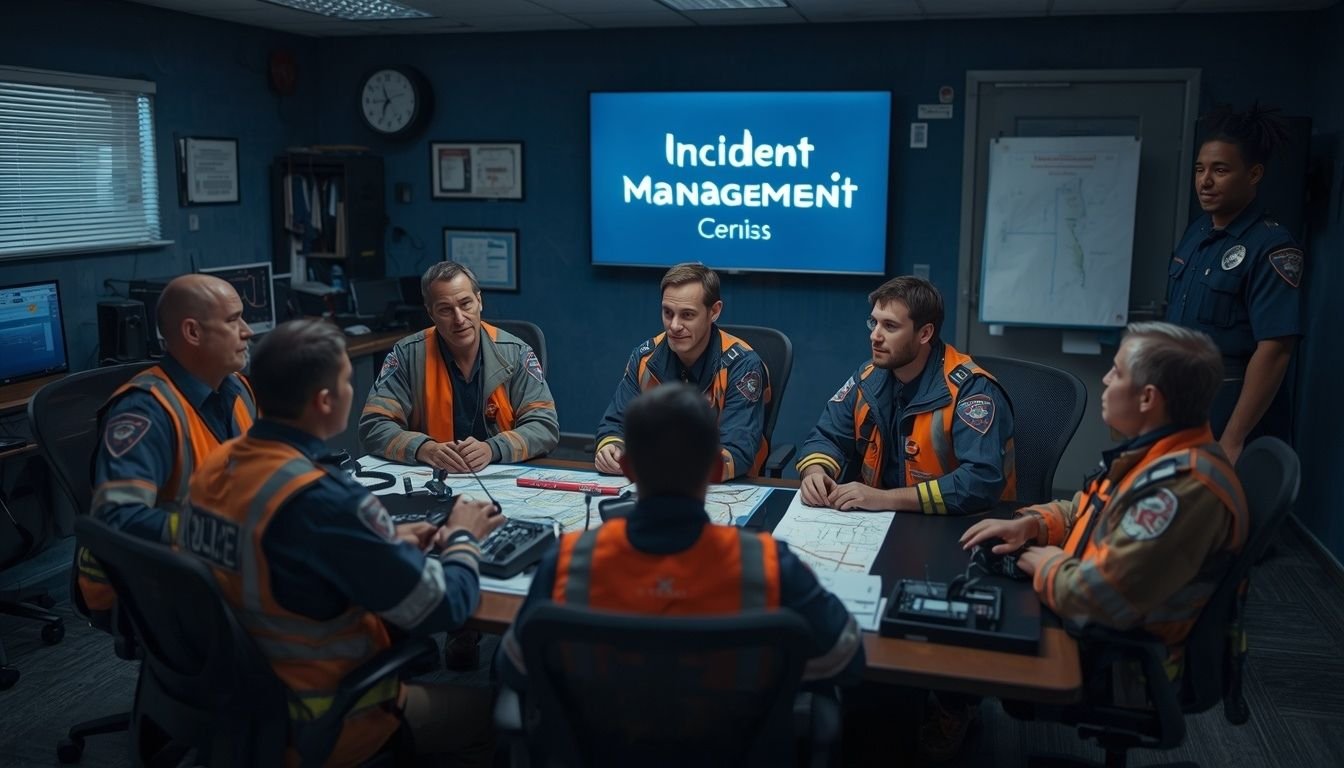
he National Incident Management System (NIMS) is a standardized framework that helps organizations across the United States coordinate emergency preparedness, response, recovery, and other incident management activities.
When people say NIMS is applicable to all stakeholders with incident related responsibilities, they mean that anyone with a relevant role in managing or supporting an incident may need to understand and follow the framework.
This includes firefighters, police officers, emergency medical personnel, government officials, nonprofit organizations, private businesses, and other people who contribute to incident operations.
The key distinction is responsibility. A person does not need to be a firefighter or work for an emergency management agency to be a NIMS stakeholder. Someone coordinating emergency supplies, sharing public information, managing a shelter, or making policy decisions during a disaster may also have an important role.
NIMS creates a common approach so these different groups can work together instead of relying on conflicting procedures or communication methods.
Top Highlights
- NIMS applies to everyone with incident management or support responsibilities, not only emergency responders.
- Government agencies, private businesses, nonprofits, and community organizations may all have roles in incident management.
- NIMS applies to incidents of different sizes and complexities, including planned events.
- The National Incident Management System provides a shared framework for communication, coordination, and resource management.
- Required training depends on a person’s role and the rules established by the responsible authorit
Which Stakeholders Are Covered by NIMS?
NIMS follows a whole-community approach. It recognizes that effective incident management often requires cooperation between organizations with different responsibilities, resources, and levels of authority.
| Stakeholder group | Example of incident related responsibilities |
|---|---|
| Emergency responders | Fire suppression, law enforcement, rescue, and emergency medical care |
| Government agencies | Emergency planning, coordination, public safety, and resource allocation |
| Elected and appointed officials | Policy decisions, emergency declarations, and strategic direction |
| Private sector organizations | Supporting critical infrastructure, providing supplies, and maintaining essential services |
| Nonprofit organizations | Shelter operations, food distribution, and disaster assistance |
| Community and faith-based groups | Supporting affected residents and coordinating volunteers |
| Public information personnel | Sharing verified information and communicating protective actions |
| People with disabilities or access and functional needs | Participating in preparedness and response planning so their needs are addressed |
These examples illustrate the range of responsibilities that may bring a person or organization within the NIMS framework. The precise duties depend on the incident, the organization, and the authority under which it operates.
Why private businesses and nonprofits matter
Emergency response often depends on resources that government agencies do not directly control.
A power company may need to restore electricity. A telecommunications provider may need to maintain communications. A nonprofit may operate a temporary shelter, while a local business supplies food or transportation.
NIMS supports coordination between these participants and public agencies. It helps establish common terminology, clarify responsibilities, and make resource sharing more effective.
Participation does not mean every organization performs the same function. Each stakeholder contributes according to its capabilities, assigned responsibilities, and applicable requirements.
When Does NIMS Apply to an Incident?
NIMS is designed for incidents of different sizes and levels of complexity. Its principles can support routine emergencies as well as major disasters.
It also applies to planned events where multiple organizations must coordinate their activities.
| Situation | How NIMS principles may help |
|---|---|
| Traffic accident | Coordinate responders and share incident information |
| Severe weather emergency | Organize response resources and communicate changing conditions |
| Large wildfire | Coordinate multiple agencies and manage resources across jurisdictions |
| Public sporting event | Coordinate emergency services, event personnel, and public information |
| Community disaster | Connect government agencies, volunteers, nonprofits, and private organizations |
The framework is scalable. A small incident may require only a limited number of personnel and simple coordination procedures. A major disaster may require multiple agencies, specialized resources, emergency operations centers, and more complex command arrangements.
NIMS is not limited to emergencies that make national news. Its principles can also support preparedness activities and planned events where coordinated incident management is necessary.
How NIMS Helps Different Organizations Work Together
When several organizations respond to the same incident, each may have its own procedures, communication systems, and responsibilities. Without a shared framework, these differences can create delays or confusion.
NIMS helps address these challenges through several interconnected functions.
1. Command and coordination
Command and coordination establish how decisions are made and how incident activities are organized. The Incident Command System (ICS) provides a standardized approach for managing on-scene operations.
Depending on the situation, coordination may also involve emergency operations centers, senior officials, and other support organizations.
2. Resource management
Incidents may require personnel, vehicles, equipment, medical supplies, shelter space, or specialized technical support.
NIMS supports standardized resource management so organizations can identify needs, request assistance, and coordinate available resources more effectively.
3. Communications and information management
Responders and decision-makers need reliable information to understand changing conditions and make appropriate decisions.
Common terminology, established reporting procedures, and coordinated information sharing help reduce misunderstandings between agencies.
4. Preparedness and training
NIMS also supports activities that take place before an incident. These include planning, training, exercises, personnel qualifications, and mutual aid arrangements.
Preparing in advance helps participating organizations understand their roles before an emergency occurs.
Does Everyone Covered by NIMS Need the Same Training?
No. NIMS applies broadly, but training requirements vary according to a person’s responsibilities, assigned position, and the requirements established by the relevant authority.
A person who provides general incident support may need introductory knowledge. Someone who supervises responders or manages incident operations may require more advanced Incident Command System training.
The responsible organization or Authority Having Jurisdiction (AHJ) determines the training and qualification requirements for many incident-related positions.
Common NIMS and ICS training pathways
| Course | General purpose |
|---|---|
| IS-700 | Introduces the National Incident Management System |
| ICS-100 | Introduces the Incident Command System |
| ICS-200 | Covers basic ICS principles for initial response and personnel preparing for supervisory roles |
| ICS-300 | Provides intermediate ICS training for expanding incidents |
| ICS-400 | Covers advanced ICS for complex incidents |
| IS-800 | Introduces the National Response Framework |
These courses serve different purposes. They are not a universal checklist that every stakeholder must complete.
For example, an employee supporting an emergency operations center may have different training needs from an Incident Commander. A nonprofit volunteer may also have different requirements from a government official directing emergency operations.
Before enrolling in courses, check the requirements set by your agency, employer, training officer, or other responsible authority.
How to Determine Your NIMS Responsibilities and Training Requirements
If you are unsure whether NIMS applies to your position or which courses you need, use the following decision process.
Step 1. Identify your incident-related role
Determine whether you respond directly, supervise personnel, coordinate resources, provide public information, support operations, or make policy decisions.
Step 2. Identify the responsible authority
Confirm which agency, employer, or jurisdiction establishes the requirements for your position.
Step 3. Match training to your duties
Ask which introductory, supervisory, or position-specific courses are required. Check whether prior training is accepted.
Step 4. Confirm completion and ongoing requirements
Keep training records and check whether refresher courses, additional qualifications, or local procedures apply.
This process helps prevent two common mistakes. The first is assuming that NIMS applies only to emergency responders. The second is assuming that every person involved in an incident must complete the same courses.
Expert Guidance on Applying NIMS Across an Organization
Organizations should distinguish between adopting the NIMS framework and assigning specific training requirements to individual personnel.
For example, a county emergency management office may coordinate a response involving fire departments, public health agencies, utility companies, and volunteer groups. Each participant contributes different resources and capabilities.
A practical implementation approach should address the following questions.
- Who has authority to make decisions? Establish command relationships and identify who can approve operational changes.
- Who provides each resource? Document how personnel, equipment, supplies, and outside assistance will be requested.
- How will information be shared? Agree on reporting channels, terminology, and procedures for communicating urgent updates.
- Which personnel need specialized training? Match course requirements to actual duties rather than assigning courses without considering job responsibilities.
- How will coordination be tested? Use exercises and after-action reviews to identify gaps in communication, planning, and resource management.
The appropriate level of implementation depends on the organization’s role and the incidents it may encounter. A small nonprofit may need a straightforward coordination plan, while a regional emergency management organization may need formal procedures for multiagency operations.
What organizations should prioritize first
Start by identifying the responsibilities that are most critical to public safety and continuity of operations. Then establish the procedures, training, and coordination arrangements needed to support those responsibilities.
This approach makes NIMS more practical because it connects the framework to real organizational needs rather than treating implementation as a paperwork exercise.
Frequently Asked Questions
Is NIMS applicable to all stakeholders with incident related responsibilities?
Yes. NIMS applies to stakeholders involved in incident management and support. This includes emergency responders, government agencies, nonprofits, private sector organizations, and officials with incident-related duties.
Is NIMS only for firefighters and police officers?
No. NIMS also covers other personnel and organizations that help prepare for, coordinate, respond to, or recover from incidents. Their responsibilities may include resource management, public information, logistics, planning, or policy decisions.
Does NIMS apply to small incidents?
Yes. NIMS is scalable and can be used for incidents regardless of size or complexity. The level of coordination and resources needed depends on the situation.
Does every NIMS stakeholder need to complete IS-700 and ICS-100?
Not necessarily. These courses provide introductory knowledge, but the training required for a particular position depends on the relevant authority’s requirements and the person’s responsibilities.
Is NIMS the same as the Incident Command System?
No. The Incident Command System is a component of NIMS. NIMS is the broader framework that also addresses resource management, communications and information management, and other incident coordination functions.
Do private companies have a role in NIMS?
Yes. Private companies may contribute personnel, infrastructure support, equipment, supplies, or other essential capabilities during incidents. Their participation depends on their responsibilities and relationship to the incident.
Who determines which NIMS training a person needs?
The relevant Authority Having Jurisdiction, employer, agency, or other responsible organization determines the applicable requirements for many positions. Individuals should confirm the requirements for their specific role.
Determining the Right NIMS Approach for Your Role
The most important point is that NIMS is a shared framework, not a single job requirement or universal training checklist. Its broad applicability allows different stakeholders to coordinate their responsibilities while maintaining their individual roles and authorities.
If you work in emergency response, government, a nonprofit, or a private organization that supports incident operations, begin by identifying your responsibilities and the procedures your organization follows. Then confirm the training and qualifications required for your position.
This role-based approach helps ensure that personnel understand how to contribute, who they report to, how resources are coordinated, and how information moves during an incident.