
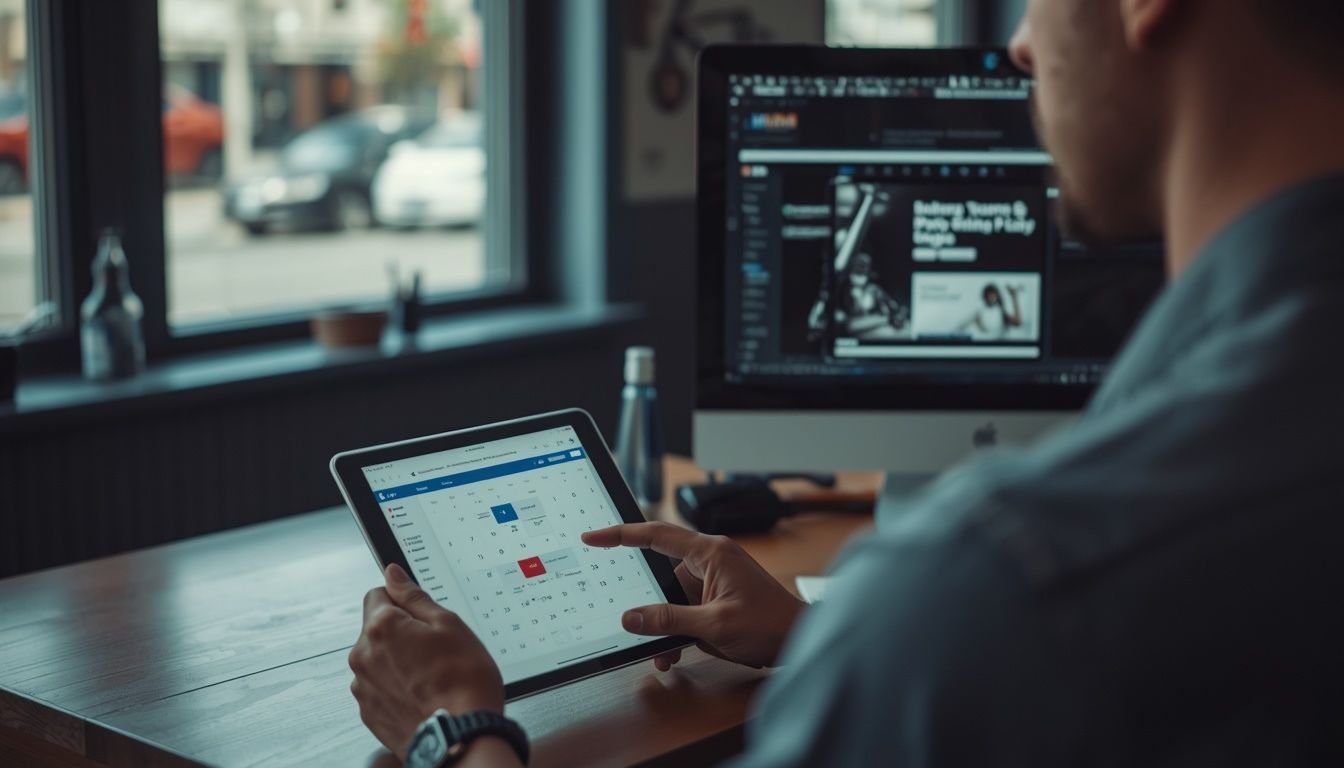
A successful local SaaS booking software Facebook ads small town market strategy starts with understanding two audiences. The local business owners who need booking software and the customers who will eventually use it to schedule appointments.
For a booking software company targeting small American towns, advertising to everyone is rarely a sensible starting point. Barbershops, salons, dog groomers, fitness studios and home service companies have different scheduling problems. A campaign that addresses one industry’s needs can make the software easier to understand and sell.
The better approach is to select a promising business category, identify towns with enough potential customers, demonstrate how the software solves an everyday problem and measure how many advertising leads become active paying accounts.
Key Takeaways
- Small-town SaaS advertising works best when campaigns focus on specific local industries rather than broad audiences.
- Booking software should connect smoothly with Facebook and Instagram lead generation.
- Local business owners respond better to practical demonstrations and clear business benefits than generic software promotions.
- A focused advertising budget can test demand before expanding into neighboring towns.
- Trial registrations are not enough. Measure activated accounts, completed bookings and paying subscribers.
Why Small-Town Markets Require a Different SaaS Advertising Strategy
A small town offers a concentrated business community, but it also limits the number of potential customers. A software company cannot assume that increasing advertising frequency will create unlimited demand.
Three challenges deserve attention.
A Limited Number of Potential Business Customers
A town might have several barbershops, independent salons, fitness studios and repair businesses. However, only a portion of these businesses may need new scheduling software.
Some already use established platforms. Others manage appointments through phone calls, text messages or social media.
The opportunity is to identify businesses with a clear reason to change.
For example:
- A barber who regularly misses appointment requests while cutting hair.
- A dog groomer who spends evenings confirming appointments manually.
- A fitness instructor who struggles to manage recurring classes.
- A salon owner who wants deposits to reduce missed appointments.
These problems create more relevant advertising opportunities than simply promoting an all-in-one booking platform.
Local Trust Influences Software Purchases
Independent business owners often want to see how a product works before committing to another monthly subscription.
They may have questions about customer adoption, setup time, payment processing and ongoing support.
A software advertisement should therefore demonstrate the actual product rather than rely on broad promises about business growth.
Useful trust-building elements include:
- A working product demonstration.
- Screenshots of the booking calendar.
- A realistic customer booking example.
- Transparent subscription pricing.
- Clear onboarding and support information.
Small Audiences Can Experience Ad Fatigue
A campaign targeting a town with a limited business population can repeatedly reach the same people.
This makes creative variety important. However, creating dozens of advertisements for a small audience is not necessarily productive.
Start with a few distinct messages and monitor frequency alongside qualified lead volume. If the same business owners repeatedly see an advertisement without responding, changing the message may be more useful than simply increasing the budget.
Choose One Business Niche Before Advertising Your Booking Software
The first major decision is deciding which industry should receive the initial advertising budget.
A booking platform may support several business categories, but that does not mean one advertisement should target all of them.
Potential small-town SaaS customer segments
| Business niche | Common scheduling problem | Relevant software feature |
|---|---|---|
| Barbershops | Missed calls and appointment requests | Online self-booking |
| Hair salons | Staff and service scheduling | Multiple staff calendars |
| Dog groomers | Manual appointment coordination | Automated reminders |
| Fitness studios | Recurring class reservations | Class scheduling |
| Tutors | Repeated lesson coordination | Recurring appointments |
| Home service companies | Managing job requests | Scheduling and dispatch |
Evaluate Each Niche by Commercial Potential
Do not select an industry solely because it has many businesses.
Evaluate these factors:
- Problem severity: Does the business regularly lose time or customers because of its current scheduling process?
- Software compatibility: Does your platform support the specific workflows the industry requires?
- Willingness to pay: Is the scheduling problem valuable enough to justify a monthly subscription?
- Customer accessibility: Can you identify and reach these business owners through local advertising?
- Retention potential: Will the business continue using the software after its initial trial?
A niche with fewer prospects but a stronger need for scheduling automation may produce more valuable customers than a larger audience with little interest in switching software.
Build a Small-Town Market Before Launching Facebook Ads
Choosing a niche is only the first step. The next challenge is identifying towns where enough potential software customers exist to justify advertising.
A useful strategy is to build a list of towns and evaluate their business communities before spending money.
Research Businesses in Each Target Town
Start with businesses that match your selected niche.
For example, if your software is designed for barbershops, research:
- Independent barbershops.
- Men’s grooming studios.
- Multi-chair barber businesses.
- Barbers offering appointment-based services.
Use Google Maps, local business directories, Facebook business pages and business websites to identify potential prospects.
Record the following information:
- Business name and town.
- Website and Facebook page.
- Number of locations.
- Whether online booking is available.
- Existing scheduling method when publicly identifiable.
- Potential scheduling problems.
- Whether the business appears to fit your software.
Do not assume a business lacks booking software simply because its website has no booking button. Confirm its existing process before approaching it.
Group Nearby Towns Into Practical Advertising Markets
Instead of creating a separate campaign for every small town, consider grouping nearby communities with similar business characteristics.
For example, a booking software company targeting independent salons could build three regional markets around groups of neighboring towns.
Example market structure
| Market | Geographic focus | Advertising purpose |
|---|---|---|
| Market A | Main town | Test initial demand |
| Market B | Nearby communities | Expand qualified reach |
| Market C | Wider regional area | Test expansion potential |
Keep track of which towns generate qualified prospects. A large audience is not automatically a valuable audience.
Estimate Market Potential Before Setting a Budget
A simple prospecting calculation can prevent unrealistic advertising expectations.
Suppose your research identifies:
- 45 suitable businesses in Town A.
- 30 suitable businesses in Town B.
- 25 suitable businesses in Town C.
Your initial prospect list contains 100 businesses.
This does not mean all 100 will see your advertisements or become customers. It gives you a starting point for evaluating the size of the market.
Set Up Facebook Ads Around Business Owners and Software Demonstrations
For B2B booking software, the advertising objective should be generating qualified business inquiries, product demonstrations or trial registrations.
The campaign should not optimize for inexpensive engagement when the actual goal is acquiring paying subscribers.
Choose the Right Campaign Objective
Meta Ads Manager provides different campaign objectives. Your selection should match the conversion process.
| Campaign objective | Suitable use | Main limitation |
|---|---|---|
| Leads | Demo requests and trial inquiries | Leads need qualification |
| Sales | Measurable trial or subscription conversions | Requires suitable conversion tracking |
| Engagement | Starting conversations through messages | Conversations may not become customers |
| Awareness | Introducing software to a new local market | Reach does not establish buying intent |
Recommended starting point: Use a Leads campaign when you are initially selling software through demonstrations or consultations.
If visitors can register and activate the software directly, test a Sales campaign when your website tracking and conversion volume support that approach.
Use Geographic Targeting Without Overcomplicating the Audience
Location is one of the most important filters in a small-town campaign.
You can build audiences around:
- Specific towns.
- Relevant ZIP codes.
- A radius around a selected location.
- Multiple nearby communities.
The right geographic setup depends on the actual market and available audience size.
One important distinction is that you are selling to business owners, not necessarily to the residents who will eventually use their booking system.
Meta does not provide a perfect filter for identifying every local business owner. Your advertising creative must help qualify the audience.
For example:
Weak targeting message
Online booking software for everyone. Start today.
Stronger targeting message
Own a barbershop in your town? Let customers request appointments online while you focus on your clients.
The second message naturally filters people who are more likely to have the problem your product solves.
Avoid Excessive Interest Targeting
Adding multiple narrow interests can make an already small audience harder to reach.
Start with a relevant geographic area and a relatively broad audience. Test business-specific messaging rather than assuming that a long list of interests will identify every owner.
If you have enough customer data, test custom audiences and lookalikes where available and appropriate.
Create Facebook Ads That Explain the Booking Software’s Value
Your advertisement should communicate a recognizable business problem within seconds.
A business owner is unlikely to care about the number of software features unless those features solve something they experience regularly.
Build Three Different Advertising Angles
1. Problem-focused advertising
Highlight missed calls, manual appointment confirmations and time spent managing schedules.
CTA: See How Online Booking Works
2. Product demonstration advertising
Show the actual booking process from the customer’s perspective and explain how appointments appear in the business calendar.
CTA: Watch a Product Demo
3. Business convenience advertising
Explain how customers can request appointments without waiting for the owner to answer every call.
CTA: Start Your Free Trial
Write Industry-Specific Ad Copy
Avoid using one generic advertisement across every business category.
Here are examples of how the message can change.
For barbershops
Example Facebook ad
Spend less time managing appointments.
Give your barbershop customers an easier way to request their next appointment online. Manage your schedule from one booking platform and spend more time serving clients.
CTA: Book a Free Demo
For dog groomers
Example Facebook ad
Make appointment scheduling easier for your grooming business.
Keep customer appointments organized and give pet owners a convenient way to request grooming sessions online.
CTA: See the Booking System
For fitness studios
Example Facebook ad
Still managing class reservations manually?
Organize class schedules and make it easier for members to reserve their next session with an online booking platform.
CTA: Explore the Platform
Only advertise features that your actual software supports. A demonstration should match the product visitors will receive after registering.
Build a Booking Software Funnel That Converts Local Leads
Getting someone to click an advertisement is only the beginning.
A successful SaaS campaign needs a clear path from the first interaction to a paid subscription.
Facebook and Instagram Advertisement
Industry-specific problem and offer
Product Landing Page
Features, pricing and product demonstration
Trial Registration or Demo
Capture business and contact information
Account Activation
Set up services, availability and booking preferences
Paying Subscriber
Active business using the platform
Create a Dedicated Landing Page for Each Industry
Sending every advertisement to the homepage creates unnecessary friction.
A barber who clicks an advertisement should arrive at a page that immediately addresses barbershop scheduling.
A useful landing page should include:
- A headline identifying the intended business.
- A short explanation of the scheduling problem.
- Screenshots of the actual software.
- Relevant features and limitations.
- Subscription pricing or trial conditions.
- A short product demonstration.
- A clear registration or demo button.
You do not necessarily need a completely different website for every niche. You can create dedicated landing pages using a consistent design while changing the examples, messaging and relevant product features.
Choose Between Instant Forms and Website Registrations
Both approaches can work, but they serve different purposes.
Meta Instant Forms
Useful when a business owner wants to request a demonstration without leaving Facebook.
Ask for:
- Business name.
- Owner or contact name.
- Email address.
- Business category.
- Current appointment management method.
Avoid collecting unnecessary information. Every additional question can create friction.
Website Registration
Useful when visitors can understand the software and start a trial without speaking to a sales representative.
This approach gives you more control over the product experience and can provide stronger signals about actual account activation.
For most early-stage campaigns, testing both approaches can reveal whether prospects prefer a personal demonstration or immediate access.
Follow Up Before Interested Business Owners Lose Interest
A submitted form is not a completed sale.
Create a follow-up process that includes:
- An immediate confirmation email.
- A clear link to schedule a demonstration.
- A short explanation of the next step.
- A personal follow-up when a qualified prospect does not register.
- A trial onboarding sequence for new accounts.
Keep follow-up relevant to the business category. A barber should receive examples of appointment management for barbershops rather than a generic software introduction.
Choose Booking Software and Marketing Tools That Support the Campaign
A SaaS business needs more than an advertising platform. It needs a reliable way to capture leads, manage demonstrations, track subscriptions and understand where customers come from.
The right tools depend on the size of the team and the complexity of the sales process.
| Tool | Main purpose | When it is useful |
|---|---|---|
| Meta Ads Manager | Campaign management | Every paid Meta campaign |
| Canva | Ad design | Creating industry-specific creatives |
| Meta Ad Library | Competitor research | Finding advertising angles |
| HubSpot CRM | Lead and customer tracking | Managing a growing prospect pipeline |
| Zapier | Workflow automation | Connecting forms and CRM systems |
| Calendly | Demo scheduling | Letting prospects choose a meeting time |
| Looker Studio | Performance reporting | Combining advertising and CRM data |
What to Look for in the Booking Platform Itself
If you are selling booking software, the platform’s capabilities must match the businesses you target.
Evaluate:
- Online booking availability.
- Staff and service management.
- Appointment reminders.
- Deposit and payment support.
- Calendar synchronization.
- Rescheduling and cancellation controls.
- Customer notifications.
- Mobile usability.
- Subscription management.
Facebook integration also needs careful evaluation.
A Facebook Page booking button, a Facebook Lead Ads connection and a website conversion tracking integration are three different capabilities. Having one does not automatically mean the platform supports the others.
For example, a business might receive leads through Meta Instant Forms but still need a CRM or automation connector to transfer those leads into its scheduling workflow.
Do not advertise a native integration unless it is actually available.
Set a Realistic Facebook Advertising Budget for Small-Town SaaS
A small-town campaign does not need a large budget to begin testing demand. It needs enough spending to generate meaningful feedback without exhausting the available market.
The budget should reflect the number of potential businesses, subscription value and expected customer acquisition cost.
Example Starting Budget
The following is a proposed testing plan, not an industry benchmark.
| Campaign activity | Suggested allocation |
|---|---|
| Initial prospecting campaign | $15 per day |
| Second creative test | $10 per day |
| Retargeting | $5 per day |
| Total daily budget | $30 |
| 30-day test budget | $900 |
This structure assumes the market is large enough to support multiple creatives and that the business has a functioning landing page and follow-up process.
If the town has very few suitable prospects, start with one campaign rather than dividing the budget into several small ad sets.
Calculate How Much You Can Afford to Acquire a Customer
Your subscription price should influence advertising decisions.
Consider this hypothetical SaaS business:
| Business metric | Example |
|---|---|
| Monthly subscription | $49 |
| Monthly gross margin | 80% |
| Gross profit per month | $39.20 |
| Customer retention assumption | 12 months |
| Estimated gross profit over 12 months | $470.40 |
The estimated 12-month gross profit is $470.40 before acquisition costs and other overhead. It assumes the customer remains subscribed for the entire period.
This gives you a starting point for evaluating acquisition costs.
If acquiring a subscriber costs $250, the business has less room for support expenses, payment processing and unexpected cancellations than if acquisition costs $100.
Do not treat a low cost per lead as proof of profitability. The important question is how much it costs to acquire a paying customer who stays subscribed.
Measure the Results That Actually Matter for SaaS Growth
Local SaaS advertising requires more than monitoring clicks and impressions.
Your reporting should connect advertising activity to actual customer behavior.
Track the Complete Conversion Journey
| Metric | What it tells you |
|---|---|
| CPM | Cost of reaching people |
| CTR | Whether the advertisement attracts attention |
| Cost per lead | Cost of generating an inquiry |
| Demo booking rate | Whether interested prospects schedule a demonstration |
| Trial registration rate | Whether prospects start using the platform |
| Activation rate | Whether new users complete important setup steps |
| Trial-to-paid rate | Whether trials become subscribers |
| CAC | Cost of acquiring a paying customer |
| Churn rate | How quickly subscribers cancel |
Configure Conversion Tracking Properly
Use the Meta Pixel and Conversions API where appropriate and technically supported.
Track important actions such as:
- Landing page views.
- Demo requests.
- Trial registrations.
- Completed onboarding.
- Subscription purchases.
For subscription businesses, connect advertising leads to your CRM and subscription records.
This allows you to distinguish someone who simply submitted a form from someone who activated an account and became a paying customer.
Use appropriate consent, privacy disclosures and data handling practices when collecting or sharing customer information.
Understand Why Some Leads Never Become Subscribers
Suppose a campaign generates 40 inquiries.
After reviewing the results, you discover:
- 20 prospects match your target industry.
- 12 schedule a demonstration.
- 7 start a free trial.
- 3 activate their accounts.
- 2 become paying subscribers.
The campaign generated 40 leads, but only two paying customers.
That difference matters.
If the advertising cost was $600, your cost per lead was $15, while your customer acquisition cost was $300.
The next improvement should focus on the stage losing the most qualified prospects. It might be the demonstration, onboarding experience or subscription offer rather than the advertisement itself.
Expand Into Nearby Towns Without Increasing Wasted Ad Spend
Once your first market generates qualified subscribers, expansion becomes a more informed decision.
Do not automatically increase the advertising radius because the first campaign produces inexpensive clicks.
Use the First Town as a Validation Market
Before expanding, establish whether:
- Business owners understand the product.
- The selected niche has a genuine scheduling problem.
- Trial users activate their accounts.
- Subscribers continue using the software.
- Customer acquisition costs are sustainable.
- Your onboarding process works without excessive manual support.
If these conditions are not met, expanding into more towns can multiply the same problems.
Replicate the Winning Industry Campaign
Suppose your initial campaign targets independent barbershops and produces paying subscribers.
Your next step could be testing nearby towns with a similar business profile.
Keep the successful message as a starting point, but update:
- Town-specific references.
- Local business examples.
- Advertising visuals.
- Landing page examples.
- Customer objections.
Do not assume that a winning campaign in one town will automatically perform equally well elsewhere.
Refresh Creative Before Audience Fatigue Becomes a Problem
Small markets have limited audience capacity.
Monitor:
- Increasing frequency.
- Declining click-through rate.
- Rising cost per qualified lead.
- Repeated exposure to the same audience.
- Declining demonstration requests.
When performance weakens, test a new problem-focused message or product demonstration.
Changing the entire campaign every few days makes it harder to identify what actually improved performance.
Expert Decision Framework: Which Small-Town SaaS Advertising Approach Should You Choose?
The best strategy depends on your software’s maturity, target industry and available customer acquisition budget.
A company with no paying subscribers should not use the same advertising approach as an established SaaS provider expanding into new towns.
Compare Three Market Entry Approaches
| Approach | Best suited for | Main advantage | Main risk |
|---|---|---|---|
| Single-niche targeting | New SaaS businesses | Clear messaging and easier validation | Limited initial market |
| Multi-town targeting | Businesses with a proven offer | More potential customers | Higher operational complexity |
| Multi-industry targeting | Established platforms | Wider customer opportunities | Less focused messaging |
What Should a New SaaS Company Choose?
Choose single-niche targeting if:
- You have limited advertising funds.
- Your software is designed for a particular industry.
- You have not validated customer demand.
- You need to understand common objections before scaling.
Choose multi-town targeting if:
- Your first market produces paying subscribers.
- Your software supports businesses across different locations.
- You have a repeatable onboarding process.
- Your customer acquisition costs are sustainable.
Choose multi-industry targeting if:
- Your product supports genuinely different business workflows.
- You have industry-specific landing pages.
- You can create separate advertising messages.
- Your team can support multiple customer segments.
For most new providers, the strongest starting point is a single industry in one well-researched local market. Expand only after you understand which advertising message produces activated and paying accounts.
This is the central principle behind a local saas booking software facebook ads small town market strategy: validate demand before increasing reach.
Frequently Asked Questions
Does Facebook advertising work for booking software in small towns?
Yes. Facebook and Instagram can help booking software providers reach independent business owners in specific geographic markets.
The results depend on industry relevance, advertising quality, software suitability and the ability to convert inquiries into paying subscribers.
How much should a SaaS company spend on local Facebook ads?
A small initial test could use $15 to $30 per day, depending on the available market and budget.
The company should evaluate qualified leads, trial registrations and customer acquisition costs before increasing spending.
Which businesses are best to target with booking software advertisements?
Barbershops, hair salons, dog groomers, fitness studios and appointment-based service businesses can be suitable prospects.
The best segment is the one with a clear scheduling problem that your software can actually solve.
Should SaaS companies use Facebook Lead Forms or landing pages?
Lead Forms are useful for collecting demonstration requests with minimal friction.
Landing pages are generally more suitable when prospects need product information, pricing details and direct trial access before registering.
How can a local saas booking software facebook ads small town market strategy generate paying customers?
Focus on one business category, target relevant local markets, demonstrate the actual software and build a measurable sales funnel.
Track the journey from the first inquiry through account activation and paid subscription rather than judging performance by lead volume alone.
How can booking software companies reduce advertising costs?
Improve industry targeting, create relevant advertising messages, remove unnecessary landing page steps and follow up with qualified prospects promptly.
Improving trial activation and customer retention also makes the overall acquisition investment more valuable.
Build a Repeatable Local SaaS Customer Acquisition Strategy
Small-town markets can provide a practical starting point for booking software companies, particularly when their products solve specific problems for independent businesses.
The strongest approach is to begin with one industry, research the available businesses, create a focused advertising campaign and demonstrate the product through a simple conversion process.
Once the first market produces customers who actively use and pay for the software, expand into similar communities.
The real measure of success is not how many local business owners click your advertisement. It is how many become long-term subscribers because your booking software solves a problem worth paying to fix.
1 Comment
[…] automated reminders when your customer management software supports them. Even a shared calendar and spreadsheet can work for a smaller […]