
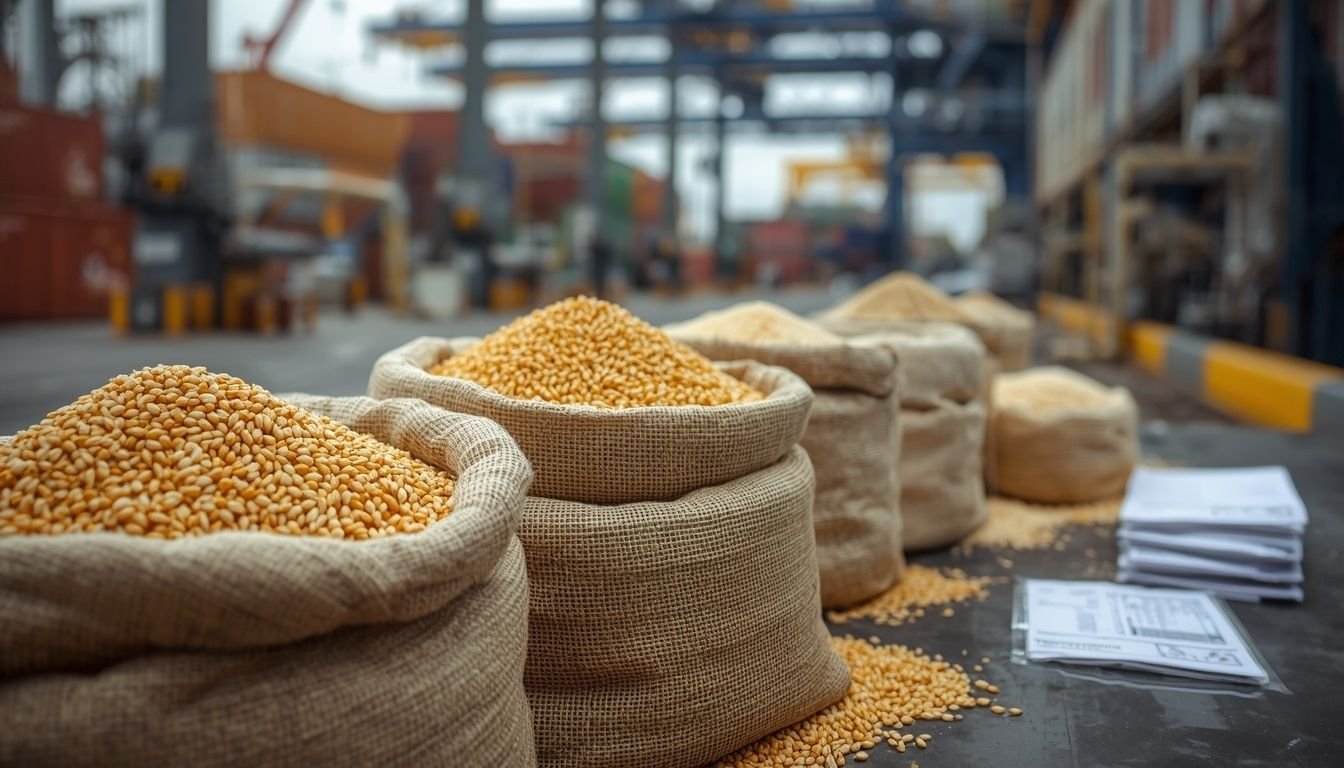
Southeast Asia millet export regulations certification requirements depend on the country of origin, the type of millet, how it is processed, and the destination market. Exporters must determine which plant health documents, food safety records, customs declarations, and product certifications apply before shipping.
For U.S. importers sourcing millet from countries such as Thailand, Vietnam, Indonesia, or other regional suppliers, the process involves two separate checks. The exporter must meet the applicable rules in the country of origin, while the importer must satisfy U.S. entry and food safety requirements.
A certificate that allows a shipment to leave one country does not automatically make it admissible in another. The safest approach is to confirm the requirements for the exact product and destination before signing a purchase agreement.
Which Export Documents Are Required for Millet Shipments?
The required paperwork depends on the shipment. Whole millet grain, hulled millet, milled flour, and seed intended for planting can fall under different regulatory conditions.
The following table provides a practical starting point for commercial shipments.
| Document or requirement | Main purpose | When it may apply |
|---|---|---|
| Commercial invoice | Records the buyer, seller, product description, quantity, and transaction value | Most commercial shipments |
| Packing list | Identifies package counts, weights, and shipment contents | Commonly required for customs clearance |
| Bill of lading or air waybill | Records the transport arrangement and shipment details | According to the transport method |
| Phytosanitary certificate | Confirms compliance with applicable plant health requirements | When required by the destination country |
| Certificate of origin | Establishes the product’s declared country of origin | When required for customs or preferential tariff treatment |
| Certificate of analysis | Reports specified laboratory results such as moisture, contaminants, or other quality parameters | When required by the buyer, contract, or applicable rules |
| Food facility registration details | Supports applicable U.S. food import compliance | When FDA registration requirements apply |
| FDA Prior Notice | Provides advance information about an incoming food shipment | Generally required for food imported into the United States |
| FSVP records | Document the U.S. importer’s foreign supplier verification activities | When the Foreign Supplier Verification Program applies |
| Organic certification | Supports a regulated organic marketing claim | When sold as organic under applicable requirements |
This is a working checklist rather than a universal list of mandatory certificates. The importer should confirm the exact documents with the destination country’s authorities, customs broker, and supplier before the goods are dispatched.
How Requirements Differ Across Southeast Asian Export Markets
Southeast Asia does not operate under one uniform millet export certification system. Each country has its own competent authorities, export procedures, and rules for particular agricultural products.
Thailand
Thailand has established procedures for issuing phytosanitary certificates for plant exports. Exporters may need to submit an application, supporting documents, and the goods for inspection according to the importing country’s requirements.
For millet, the relevant authority and procedure should be confirmed with Thailand’s Department of Agriculture. The exporter should also verify whether the product is intended for human consumption, animal feed, or planting because the intended use can affect the applicable conditions.
Before contracting with a Thai supplier, request confirmation of:
- The exact product description and botanical name.
- The availability of a phytosanitary certificate if required.
- Any inspection or pest-control requirements.
- Applicable food safety and packaging records.
- The exporter’s ability to provide documents matching the shipment.
Vietnam
Vietnamese exporters should confirm the applicable plant quarantine, customs, and food safety procedures for the specific millet product.
Do not assume that processed millet flour and unprocessed grain have identical requirements. Processing can affect the product’s regulatory classification, while intended use may determine whether additional controls apply.
A U.S. buyer should request the supplier’s proposed export document set and verify it against the U.S. entry requirements before shipment.
Indonesia
Indonesia has agricultural quarantine and food-related regulatory systems that may apply to millet exports. The exact obligations depend on the product and destination.
Buyers should distinguish between millet for human consumption, feed, and planting. Seed intended for propagation may face different plant health conditions from grain sold as food.
The exporter should confirm the applicable documents with the Indonesian agricultural quarantine authority and the destination country’s import authority.
Other Southeast Asian suppliers
For suppliers in other Southeast Asian countries, use the same verification process rather than applying Thailand’s or Indonesia’s rules automatically.
Ask the supplier to identify the competent authority responsible for issuing each required document. Verify whether the certificate is issued for the specific commodity, destination, and intended use.
Phytosanitary Certification for Millet Exports
A phytosanitary certificate addresses plant health risks. It is not a general certificate of food safety, quality, or nutritional value.
The need for this document depends on the importing country’s rules and the product’s classification. Whole grain, hulled grain, processed flour, and planting seed should not be treated as interchangeable.
What does a phytosanitary certificate confirm?
Depending on the applicable requirements, the certificate confirms that the inspected consignment meets specified plant health conditions.
Those conditions may involve:
- Freedom from regulated pests.
- Removal of soil and prohibited extraneous material.
- Required inspection or pest treatment.
- Additional declarations specified by the importing country.
- Compliance with conditions for the particular commodity.
A certificate should accurately identify the product and shipment. Differences in botanical names, quantities, packaging, or destination details can create delays when documents are reviewed.
How to prepare for phytosanitary inspection
Before requesting inspection, the exporter should:
- Confirm the importing country’s current plant health requirements.
- Prepare the shipment and packaging for inspection.
- Ensure the product description and quantity match the application.
- Arrange any required testing or treatment.
- Coordinate inspection and certificate issuance with the responsible authority.
- Confirm that the certificate remains valid for the intended shipping schedule.
Do not book a shipment on the assumption that inspection or certification will be completed by a particular date. Processing times depend on the authority, the shipment, and any required corrective measures.
U.S. Import Requirements for Millet From Southeast Asia
For American buyers, overseas export documents are only one part of the process. Millet imported for human consumption must comply with applicable U.S. food laws and customs requirements.
FDA facility registration and Prior Notice
Foreign facilities that manufacture, process, pack, or hold food for U.S. consumption generally must register with the FDA unless an exemption applies. Applicable facilities must maintain the required registration details.
The FDA must also receive Prior Notice of incoming food shipments. The notice provides information that helps the agency assess shipments before arrival.
Registration does not mean that the FDA has approved a supplier’s products or guaranteed their admission into the United States. Imported food can still be examined, detained, or refused if it fails to meet applicable requirements.
Foreign Supplier Verification Program
The Foreign Supplier Verification Program, commonly called FSVP, places risk-based verification responsibilities on covered U.S. food importers.
For millet imports, the importer should determine whether the rule applies and maintain the records required for the specific food and supplier.
Depending on the circumstances, verification activities may include:
- Identifying reasonably foreseeable food safety hazards.
- Evaluating the supplier’s safety practices and compliance history.
- Approving suppliers based on the relevant risk assessment.
- Reviewing appropriate food safety records.
- Conducting audits, sampling, or testing when warranted.
- Documenting corrective actions when problems are identified.
A supplier’s food safety certificate may support this assessment, but it does not automatically replace the importer’s own obligations.
Product labeling and food safety
Millet sold as packaged food must meet applicable U.S. labeling requirements. The required information depends on how the product is packaged and marketed.
Review the product name, ingredient statement where applicable, net quantity, responsible business information, and any required nutrition or allergen declarations.
Also establish appropriate quality specifications for moisture, foreign material, pesticide residues, mycotoxins, heavy metals, or microbiological hazards where relevant to the product and risk assessment. Not every test applies to every shipment, so testing should follow the product’s intended use, supplier history, and applicable legal limits.
Export Certifications That Buyers Should Not Confuse
Several documents and certifications may appear in a millet supplier’s sales package. They serve different purposes.
| Certificate or record | What it supports | What it does not automatically establish |
|---|---|---|
| Phytosanitary certificate | Plant health compliance | Full food safety compliance |
| Certificate of analysis | Results for specified samples and test parameters | Compliance with every possible safety requirement |
| HACCP documentation | A food safety hazard-control system | Automatic acceptance by every importing country |
| ISO 22000 certification | A food safety management system | Guaranteed shipment clearance |
| Organic certification | Eligibility for applicable organic claims | Phytosanitary or general import compliance |
| Certificate of origin | Declared origin of the goods | Automatic eligibility for preferential tariffs |
| Export declaration | Information reported for customs export procedures | Permission to import into the destination market |
Buyers should assess each document against a defined requirement. A supplier that holds a recognized management-system certification may have useful controls in place, but the certification should not be treated as proof that every shipment is compliant.
How to Verify the Correct Tariff Classification
Tariff classification affects customs declarations, duty calculations, trade statistics, and the identification of product-specific requirements.
Do not select a tariff code solely because a supplier used it on an earlier invoice. The correct classification may depend on whether the goods are whole millet, hulled grain, flour, seed, or a prepared food product.
For a U.S. import, the buyer or customs broker should confirm the applicable Harmonized Tariff Schedule classification and any relevant additional requirements.
The classification process should include:
- The product’s exact physical form.
- Whether it has been hulled, milled, or otherwise processed.
- Its intended use.
- Its botanical identity where relevant.
- The country of origin.
- Any applicable trade preference or duty provision.
If the classification remains uncertain, obtain professional customs guidance before finalizing the landed-cost calculation.
Expert Decision Framework for Choosing a Millet Supplier
The most suitable supplier is not necessarily the one offering the lowest price per ton. A low purchase price can become expensive if documentation is incomplete, laboratory results are unacceptable, or the shipment cannot enter the destination market.
Use the following framework to evaluate suppliers before making a commercial commitment.
1. Confirm the product and destination
Start by defining the exact millet type, processing level, intended use, and importing country.
A food-grade millet shipment to the United States may require a different compliance assessment from planting seed or animal feed.
2. Request documents before payment
Ask shortlisted suppliers to provide sample copies of their export documentation and relevant food safety records.
Check that the company name, facility details, product description, country of origin, and proposed shipping information are consistent.
If a certificate cannot be issued until inspection or shipment preparation, obtain written confirmation of the procedure and timing rather than accepting an unsupported promise.
3. Assess product quality independently
Agree on specifications before signing the contract. Depending on the product, these may include:
- Moisture content.
- Purity and foreign material.
- Grain size and appearance.
- Pest damage.
- Relevant chemical contaminants.
- Packaging and storage conditions.
Define the sampling method, acceptable limits, laboratory arrangements, and responsibility for rejected goods. A certificate of analysis is most useful when its sampling method and test scope are clear.
4. Calculate the complete landed cost
Compare suppliers using the same delivery basis. Include the purchase price, freight, insurance where applicable, customs duties, brokerage, inspections, testing, storage, and possible demurrage.
A supplier with a higher quoted price may offer better value if its documentation, product consistency, and shipping arrangements reduce the risk of delays.
5. Verify before dispatch
Do not release the shipment merely because the exporter has supplied a document package.
The importer and customs broker should confirm the entry requirements, document consistency, FDA obligations, and any applicable plant health conditions before the cargo leaves the origin country.
A practical decision rule is to proceed only when the product specification, required documents, compliance responsibilities, and landed-cost estimate are agreed upon in writing.
Common Mistakes That Delay Millet Shipments
Several avoidable mistakes can create problems for exporters and importers.
Using the wrong product description: Generic descriptions such as grain or millet may not provide enough detail for classification or certification.
Assuming every shipment needs the same certificates: Requirements depend on the product, origin, destination, and intended use.
Treating voluntary certifications as legal permission to import: A quality or food safety certificate does not replace mandatory customs or regulatory requirements.
Ignoring laboratory specifications: A shipment can have complete paperwork and still fail buyer specifications or applicable safety limits.
Applying an incorrect tariff code: This can affect duties and cause customs review or correction.
Waiting until loading to verify requirements: Missing permits, incorrect certificates, or unresolved entry questions can result in costly delays.
Assuming a certificate guarantees clearance: Regulatory authorities retain the ability to examine shipments and enforce applicable requirements.
Frequently Asked Questions
What documents are required to export millet from Southeast Asia?
Common commercial documents include an invoice, packing list, and transport document. Depending on the origin and destination, exporters may also need a phytosanitary certificate, certificate of origin, laboratory records, or additional regulatory documents.
The exact requirements should be confirmed for the specific millet product and importing country.
Are phytosanitary certificates mandatory for all millet exports?
No. The requirement depends on the importing country’s plant health rules and the product’s classification. Whole grain, processed millet, and planting seed may have different requirements.
Exporters should confirm the conditions with the competent plant protection authority before shipping.
What are the Southeast Asia millet export regulations certification requirements for U.S. buyers?
U.S. buyers should verify the origin country’s export conditions alongside applicable U.S. food import requirements. These can include FDA facility registration, Prior Notice, FSVP compliance, accurate customs classification, and any applicable plant health conditions.
No single certificate automatically satisfies every requirement.
Does millet imported into the United States need FDA approval?
The FDA generally does not preapprove individual conventional food products or shipments before import. However, applicable facility registration, Prior Notice, food safety, labeling, and other requirements must be met. Shipments may be inspected or refused if they do not comply.
Is organic certification required for millet exports?
Organic certification is not generally required for millet simply because it is exported. However, products marketed as organic must meet the applicable organic production, certification, and labeling rules in the destination market.
U.S. buyers should verify the supplier’s eligibility to support the intended organic claim.
How can an importer reduce the risk of shipment rejection?
Confirm the tariff classification and import conditions early, approve written product specifications, verify the supplier’s records, arrange appropriate testing, and check all required documents before dispatch. A customs broker and relevant regulatory authorities can help resolve product-specific questions.
The Safest Way to Approve a Millet Export Shipment
Successful millet trade depends on matching the product, its documentation, and the destination market’s requirements. Exporters should establish which certificates their authorities can issue, while importers should independently verify the rules that apply at the destination.
For U.S.-bound shipments, the key decision is whether the supplier can provide the specified product with reliable quality evidence and whether the importer can meet the applicable food safety and entry obligations.
Confirm these points before payment and dispatch. That approach gives both parties a clearer view of compliance responsibilities, potential costs, and the risks that could otherwise disrupt the shipment.