
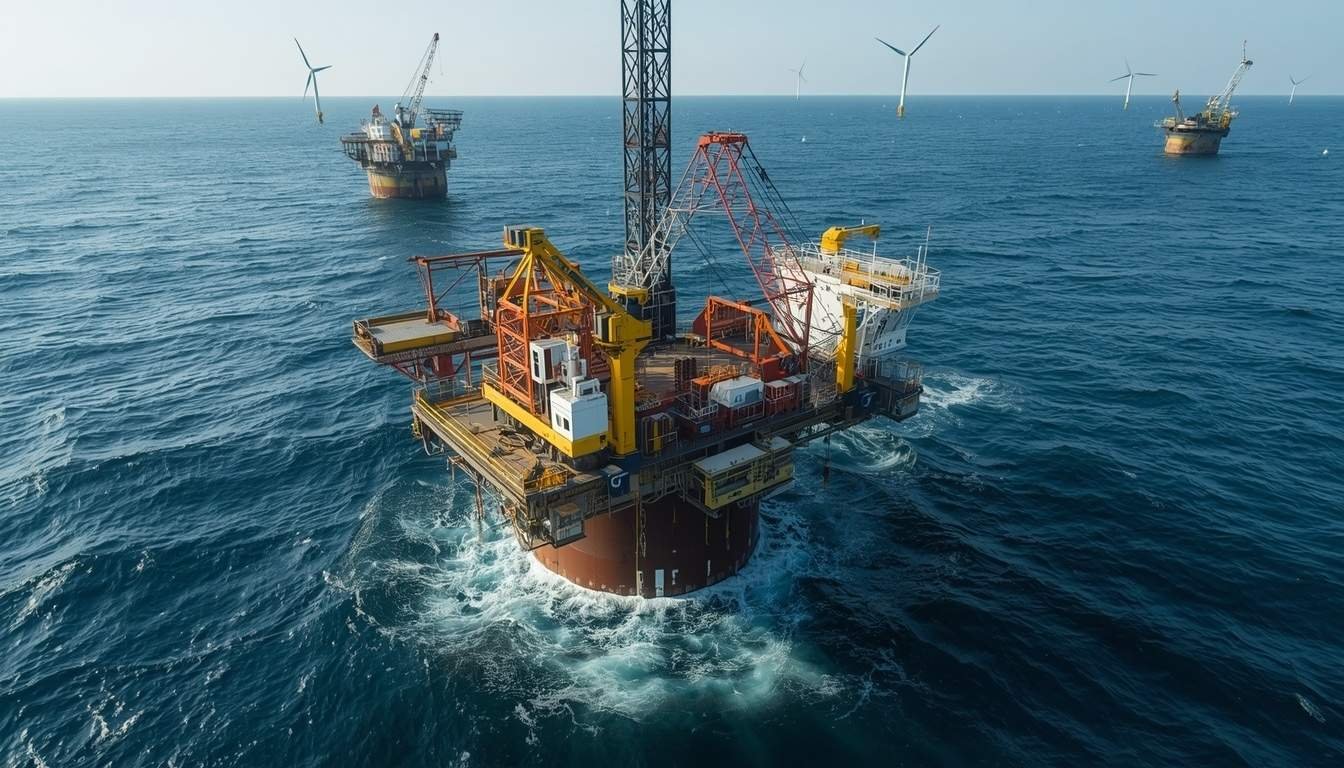
Project management challenges in offshore wind farm installation field work go beyond keeping construction activities on schedule. Teams must coordinate heavy-lift vessels, turbine components, foundations, subsea cables, port operations, and offshore personnel while working within changing weather conditions and strict safety requirements.
A delay in one activity can affect several others. If a foundation installation vessel arrives late, for example, turbine installation may have to move to a different date. The change can also affect component deliveries, vessel bookings, contractor availability, and the project budget.
For U.S. offshore wind projects, these challenges can become more complex because vessel requirements, port capacity, marine transportation, and project approval timelines influence how installation work is organized.
Effective management requires more than a detailed construction schedule. Project managers need a realistic installation sequence, reliable information from offshore teams, contingency plans, and a clear process for making decisions when conditions change.
Key Challenges at a Glance
- Weather conditions can disrupt offshore installation schedules and reduce productive working hours.
- Vessel availability and U.S. maritime requirements affect transportation plans and installation costs.
- Poor coordination between contractors, ports, and offshore crews can create expensive delays.
- Installation schedules must account for safety limits, equipment readiness, and dependencies between tasks.
- Integrated planning and clear decision-making help project teams respond to offshore disruptions.
Why Offshore Wind Installation Is Difficult to Manage
Offshore wind construction combines land-based logistics with marine engineering and offshore operations. Unlike a typical construction site, the work area is accessible only through suitable marine transportation or other approved access arrangements.
Equipment and personnel must arrive at the right location at the right time. Weather conditions must permit the planned operation, and the vessel, crew, and lifting equipment must be ready before a critical task begins.
Several activities may depend on the completion of earlier work.
For example, turbine installation generally depends on the relevant foundations being ready and accepted. Cable installation may depend on route preparation, equipment availability, and coordination with other marine activities.
These dependencies create three major management pressures.
- Limited flexibility: Offshore activities cannot always move to another day without affecting vessel bookings and connected work packages.
- High resource costs: Specialized vessels, marine crews, and heavy equipment can remain costly even when weather or technical problems prevent productive work.
- Interdependent operations: A delay in one work package can affect contractors working on different parts of the project.
The challenge is to manage these dependencies before they become schedule delays rather than simply reacting after work stops.
1. Weather Windows and Uncertain Installation Schedules
Weather is one of the most important factors affecting offshore wind installation. High winds, waves, strong currents, poor visibility, and other marine conditions can prevent certain operations from proceeding safely.
However, the effect depends on the task and equipment involved. The conditions suitable for transporting components may not be suitable for lifting a turbine section or transferring personnel between vessels.
A project manager therefore cannot rely on a general forecast that conditions will be good throughout the day. Each operation needs appropriate environmental limits and a realistic assessment of the expected conditions.
How weather delays affect the project
Consider a project scheduled to install several turbine components during a planned offshore campaign.
The installation vessel arrives at the site, but forecast wave conditions exceed the operating limits for the planned lifting operation. The team postpones the lift.
The vessel may remain on standby while the project manager reassesses the forecast. If the suitable weather window becomes too short, the operation may need to move to another day.
That change can affect the next vessel movement, component deliveries, crew schedules, and other installation activities.
The cost of the delay is therefore not limited to the hours lost during bad weather.
How project managers can reduce weather-related disruption
Build weather allowances into the schedule. Installation plans should account for expected seasonal conditions, task-specific weather limits, and the possibility of consecutive days without suitable working conditions.
Use rolling forecasts. Compare the latest forecast with the installation plan instead of treating the original schedule as fixed.
Prepare alternative work. When a critical offshore operation cannot proceed, identify other activities that can be completed safely without creating additional congestion or operational conflicts.
Set decision deadlines. Establish when the team must decide whether to proceed, wait, or reschedule. This helps prevent expensive last-minute changes to vessel movements and personnel assignments.
Weather contingency should be based on the actual installation method and site conditions. Applying the same allowance to every project can either underestimate the risk or create unnecessary schedule padding.
2. Vessel Availability and Marine Transportation
Offshore wind farms depend on specialized marine assets for foundation installation, turbine lifting, cable laying, surveying, personnel transfer, and support operations.
These vessels are not interchangeable. A vessel suitable for transporting components may not have the crane capacity, deck arrangement, positioning capability, or equipment required for installation.
Availability can become a major scheduling constraint when multiple projects need similar vessels during the same construction season.
U.S. vessel requirements add another planning layer
Project managers working in U.S. waters must evaluate applicable maritime requirements when planning how components and equipment will move between ports and offshore sites.
The Jones Act generally applies to the transportation of merchandise between U.S. points and requires qualifying vessels to be U.S.-built and U.S.-flagged, among other requirements. Its application depends on the specific activity and transportation arrangement.
Consequently, offshore wind projects may need a combination of U.S.-flagged support or feeder vessels and specialized foreign-flagged installation vessels where legally permissible.
The project team must confirm the proposed arrangement with qualified maritime counsel and relevant compliance specialists rather than assuming that any available vessel can perform every task.
Practical vessel planning measures
Project managers should:
- Confirm vessel specifications against the installation method before finalizing contracts.
- Verify availability for the complete campaign rather than only the planned arrival date.
- Coordinate maintenance periods, mobilization, crew changes, and transit time.
- Evaluate backup arrangements for critical vessel failures.
- Confirm that proposed transportation and installation methods comply with applicable requirements.
- Assess how a delay in one vessel’s work will affect connected operations.
The key is to treat vessel availability as a project-wide resource constraint rather than an isolated procurement task.
3. Port Capacity and Component Delivery
Offshore wind components are large, heavy, and difficult to transport. Foundations, tower sections, blades, nacelles, and floating substructures may require specialized handling areas, heavy-lift equipment, reinforced storage areas, and suitable access for transport vehicles.
A port can be geographically close to a wind farm and still be unsuitable for a particular installation plan.
Its limitations may include insufficient storage space, restricted water depth, inadequate lifting capacity, limited staging areas, or congestion with other port users.
Why port delays become offshore delays
Imagine that a shipment of turbine components reaches the port on time, but the planned storage area is occupied by components from an earlier delivery.
The project team may be unable to unload the shipment as planned. Transport vehicles and handling crews must be rescheduled, while the installation vessel may have to wait for its load.
If the vessel is booked for a limited period, the port problem can become an offshore scheduling problem.
Managing port and delivery risks
A reliable logistics plan should connect manufacturing, inland transportation, port handling, component storage, vessel loading, and offshore installation.
Project managers should monitor:
- Component manufacturing and inspection status.
- Transport permits and delivery windows.
- Port storage capacity and handling equipment.
- Loading sequences and vessel deck capacity.
- Component preservation and inspection requirements.
- The readiness of the next installation activity.
The project team should also define where components will go if they arrive earlier or later than expected.
For floating offshore wind projects, storage and staging arrangements may require additional attention because large floating foundations can create different space and handling requirements from fixed-bottom foundations.
4. Contractor Coordination and Communication
An offshore wind installation project may involve the developer, engineering consultants, turbine suppliers, foundation contractors, cable installers, marine contractors, port operators, and inspection teams.
Each organization has its own contract, schedule, reporting process, and responsibilities. These arrangements can create coordination problems when different teams use separate planning assumptions.
For example, the cable contractor may expect a marine work area to be available on a particular date. The foundation contractor may still be completing work in that area.
If the conflict is identified only after vessels have been mobilized, the project may face avoidable waiting time and additional costs.
Establish one coordinated installation plan
The project manager should maintain a common schedule that connects the major work packages and identifies dependencies between them.
Each contractor should understand:
- Which activities must be completed before its work can begin.
- What information or approvals are required before mobilization.
- Who has authority to approve schedule changes.
- How technical issues and safety concerns must be reported.
- What happens when two contractors require the same work area or marine resource.
Regular coordination meetings are useful, but they must produce decisions rather than simply exchange status updates.
A practical meeting should identify upcoming constraints, assign an owner to each unresolved issue, establish a deadline, and record any change to the agreed installation sequence.
Use clear escalation procedures
Not every problem should require senior management approval. Routine operational decisions can remain with designated site or package managers, while changes affecting safety, major costs, critical milestones, or contractual responsibilities should follow a defined escalation process.
This reduces confusion when offshore teams must respond quickly to changing conditions.
5. Offshore Safety and Operational Readiness
Offshore installation combines heavy lifting, work at height, marine transportation, electrical systems, and operations in a changing environment.
A schedule may show that an activity is ready to begin, but the work must not proceed unless the required safety and technical conditions are satisfied.
Project managers must ensure that safety requirements are integrated into planning rather than treated as a separate administrative exercise.
Common safety management challenges
Risks can arise from:
- Lifting heavy components in changing marine conditions.
- Transferring workers between vessels or structures.
- Fatigue during extended offshore shifts.
- Equipment failure or unexpected technical conditions.
- Poor coordination between simultaneous operations.
- Delays in emergency response or personnel evacuation.
The specific hazards depend on the installation method, site, vessel, equipment, and work scope.
Make readiness a formal decision
Before a critical installation activity begins, the responsible team should verify that the necessary conditions have been met.
This may include approved work procedures, equipment inspections, qualified personnel, weather limits, lifting plans, communication arrangements, and emergency response provisions.
The team should also agree on stop-work authority and the process for restarting an activity after a safety or technical interruption.
Schedule pressure must never override safety limits.
A project manager should also track safety-related corrective actions and verify that important issues are closed before the affected work proceeds.
6. Installation Sequencing and Technical Dependencies
Offshore wind installation is a sequence of connected engineering and construction activities. The correct order depends on the foundation type, turbine design, cable system, installation method, and site conditions.
For fixed-bottom projects, the sequence may include seabed preparation, foundation installation, foundation acceptance, turbine installation, and cable work. Some activities can overlap when engineering and safety requirements allow.
Floating offshore wind projects have different dependencies. Floating foundations may be assembled onshore or nearshore, integrated with turbine components, and towed to the installation area. Mooring and dynamic cable activities introduce additional coordination requirements.
Identify the real critical path
A project schedule can appear healthy even when a critical activity is at risk.
For example, turbine components may be delivered ahead of schedule, but installation cannot begin because the foundations have not passed the required inspections.
The early delivery does not automatically create progress. It may instead increase storage, handling, and preservation costs.
Project managers should identify the activities that directly control the completion date and monitor the conditions needed for each activity to start.
A useful installation readiness review asks four questions.
- Is the required equipment available and technically ready?
- Have all prerequisite activities been completed and accepted?
- Are the necessary personnel, permits, and approvals in place?
- Can the work proceed within the expected environmental and safety limits?
If any answer is no, the project team should assess the schedule impact before committing resources.
7. Budget Control and Offshore Cost Overruns
Offshore installation budgets are exposed to risks that are difficult to predict precisely. Weather delays, vessel standby, equipment problems, rework, port congestion, and contractor changes can all increase costs.
The challenge is not simply that offshore operations are expensive. It is that several cost categories may increase at the same time when one disruption affects the installation sequence.
For example, a delayed foundation installation campaign may extend vessel time, postpone turbine installation, and require changes to crew mobilization.
If the budget tracks only the direct cost of the delayed activity, the total financial impact may be underestimated.
Track the cost of schedule disruption
Project managers should monitor actual spending against the approved budget and forecast the cost of completing the remaining work.
Useful indicators include:
- Vessel standby and additional operating time.
- Contractor variation requests and claims.
- Equipment repair and replacement costs.
- Port storage and component handling charges.
- Rework caused by installation or inspection failures.
- Remaining contingency compared with outstanding project risks.
Each major risk should have an identified owner, an estimated financial exposure where possible, and a defined response plan.
Cost estimates should distinguish confirmed costs from assumptions and uncertain future expenses.
This gives decision-makers a clearer picture of whether a proposed recovery action will genuinely reduce the overall project cost.
8. Supply Chain Disruptions and Equipment Readiness
Offshore wind installation depends on components manufactured by different suppliers, often across multiple locations.
A delay in one critical component can affect an entire installation campaign. Replacement parts may take time to manufacture or transport, while specialized equipment may require technical inspection before use.
The problem becomes more serious when the delayed item is needed for a task that controls the project schedule.
Improve visibility across suppliers
Procurement teams should identify long-lead items and connect their delivery dates to the installation schedule.
A purchase order marked as complete does not necessarily mean the item is ready for offshore use. Manufacturing completion, inspection, documentation, transportation, and acceptance may still be outstanding.
A practical readiness tracker should show the current status of each critical item, its expected arrival date, outstanding approvals, and the work package that depends on it.
Where technically and commercially reasonable, the project team can also evaluate alternative suppliers, critical spare parts, or backup equipment arrangements.
Substitutions must undergo the required engineering and quality reviews before use.
9. Environmental Requirements and Marine Work Restrictions
Offshore wind construction takes place in marine environments that support commercial fishing, shipping, wildlife, and other activities.
Project teams may need to comply with environmental permits, protected-species requirements, marine monitoring conditions, navigation restrictions, and other project-specific obligations.
These requirements can influence when and how certain installation activities proceed.
For example, an activity may need to stop or change its method if monitoring identifies a condition covered by the project’s environmental requirements.
The project manager must understand which restrictions apply to each work package and how they affect the construction sequence.
Environmental planning should include:
- A clear register of applicable permits and conditions.
- Defined responsibilities for environmental monitoring.
- Procedures for reporting and responding to unexpected findings.
- Coordination with marine operations and construction teams.
- Records demonstrating compliance with applicable requirements.
For U.S. projects, the relevant federal, state, and local requirements depend on the project location, approvals, and activities involved. Regulatory reviews and changes should be assessed against the specific project rather than handled through generic assumptions.
A Practical Framework for Managing Offshore Installation Risks
Project managers can make these challenges more manageable by connecting risk assessment, installation scheduling, resource planning, and daily operational decisions.
The following framework provides a practical starting point.
| Management Area | What to Monitor | Recommended Action |
|---|---|---|
| Weather | Forecast conditions and task-specific operating limits | Review the forecast and agree on proceed or postpone decisions |
| Vessels | Availability, readiness, transit time, and maintenance | Confirm vessel commitments against the integrated schedule |
| Port logistics | Component arrivals, storage, and loading readiness | Coordinate deliveries with the installation sequence |
| Contractors | Work package dependencies and unresolved issues | Assign owners and deadlines for schedule-critical decisions |
| Safety | Readiness checks, hazards, and corrective actions | Verify required controls before work starts |
| Budget | Standby costs, changes, and remaining contingency | Update the cost forecast when risks materialize |
| Supply chain | Manufacturing, inspection, and delivery status | Escalate delays affecting critical activities |
| Environmental compliance | Permit conditions and monitoring results | Confirm restrictions and required actions before mobilization |
Use a rolling look-ahead schedule
A detailed project baseline remains important, but offshore teams also need a shorter-term plan that reflects current conditions.
A rolling look-ahead schedule can cover the next several weeks, with more detailed planning for the immediate work period. The exact planning horizon should reflect vessel commitments, weather uncertainty, component lead times, and the complexity of the installation campaign.
The schedule should distinguish between work that is confirmed, work that depends on outstanding conditions, and work that is only a contingency option.
This makes it easier to identify problems early without repeatedly rebuilding the entire project plan.
Conduct scenario-based planning
Instead of planning around a single expected outcome, evaluate what happens if a critical assumption changes.
For example, the project team can assess:
- What happens if the installation vessel is unavailable for several days?
- Which activities can continue if the weather prevents lifting operations?
- How will a late component delivery affect the next installation campaign?
- What resources are required if an inspection identifies a technical problem?
- Which milestones are affected if port access becomes restricted?
The goal is not to predict every possible disruption. It is to understand which disruptions could cause the greatest impact and prepare proportionate responses.
Facts Table for Offshore Wind Installation Planning
| Planning Factor | Key Consideration | Project Management Implication |
|---|---|---|
| Weather conditions | Limits vary by activity and equipment | Use task-specific weather criteria and contingency allowances |
| Vessel selection | Capabilities differ by installation method | Match vessel specifications to the engineering plan |
| U.S. maritime compliance | Requirements depend on the activity and transportation arrangement | Review the vessel strategy before contracting and mobilization |
| Port infrastructure | Handling capacity, storage, and access can restrict operations | Verify port readiness against component and vessel requirements |
| Fixed-bottom installation | Foundation acceptance affects downstream activities | Track foundation readiness before committing turbine installation resources |
| Floating installation | Assembly, towing, mooring, and cable work create additional dependencies | Integrate onshore and offshore schedules |
| Contractor interfaces | Multiple work packages may compete for resources or access | Establish clear responsibilities and coordinated work plans |
| Cost uncertainty | Disruptions can affect several cost categories simultaneously | Update the forecast using actual events and remaining risks |
Frequently Asked Questions
What are the main project management challenges in offshore wind farm installation field work?
The main challenges include weather-related delays, vessel availability, port logistics, contractor coordination, offshore safety, installation sequencing, and budget control. Each can affect the others, so project managers need an integrated plan rather than separate schedules for individual contractors.
How does weather affect offshore wind installation schedules?
Weather can prevent lifting, transportation, personnel transfer, and other marine operations when conditions exceed the applicable operating limits. Delays may also affect vessel bookings, contractor schedules, and component deliveries. Forecast monitoring and realistic weather contingency allowances help teams manage these risks.
Why are installation vessels important to offshore wind projects?
Installation vessels provide the lifting capacity, positioning systems, deck space, and other capabilities required for specific offshore tasks. Their limited availability can constrain construction schedules. U.S. maritime requirements can also influence which vessels may perform particular transportation activities.
How can project managers reduce offshore construction delays?
They can improve schedule integration, verify equipment readiness, monitor weather, coordinate contractors, and identify critical dependencies before mobilization. Regular risk reviews and clear decision-making procedures also help teams respond to disruptions without creating unnecessary delays elsewhere.
What is the difference between fixed-bottom and floating offshore wind installation?
Fixed-bottom projects generally use foundations secured to the seabed. Floating projects use floating structures that are connected to the seabed through mooring systems. Floating installations introduce additional planning requirements for assembly, towing, mooring, and dynamic cable connections.
How should project managers control offshore wind installation costs?
They should track vessel standby, contractor changes, port expenses, equipment problems, rework, and contingency usage. Cost forecasts should reflect both direct expenses and the wider effects of schedule disruption on connected work packages.
How can contractors improve coordination during offshore installation?
Contractors can work from an integrated schedule with clearly defined responsibilities, shared readiness requirements, and agreed escalation procedures. Regular coordination meetings should resolve interface issues, assign owners, and document decisions that affect the installation sequence.
How can teams prepare for unexpected installation problems?
Teams should identify high-impact risks before construction, establish practical contingency arrangements, and define alternative actions where technically and legally feasible. Scenario planning helps project managers understand which resources and decisions will be needed if the original installation plan cannot proceed.
Final Thoughts
Successful offshore wind installation depends on coordinating marine operations, construction activities, equipment deliveries, contractor responsibilities, and safety requirements within a changing operating environment.
The most effective project managers identify critical dependencies early and understand how a disruption in one area can affect the wider construction schedule and budget. They use current operational information to make decisions, verify readiness before committing resources, and maintain realistic contingency plans.
For U.S. offshore wind projects, vessel arrangements, port capabilities, applicable maritime requirements, and project-specific environmental obligations also need to be incorporated into the installation plan.
A coordinated approach cannot eliminate every delay. It can, however, help project teams identify risks sooner, limit avoidable costs, and make better decisions throughout offshore construction.